Category: Bjj / Martial Arts

  • How to Improve Faster in Jiu-Jitsu (No Gimmicks, Just Results)

    How to Improve Faster in Jiu-Jitsu (No Gimmicks, Just Results)


    Jiu-Jitsu Isn’t a Shortcut—Here’s Why

    There’s this myth floating around in the martial arts world:

    “Jiu-Jitsu is different. You don’t need conditioning. You can skip warm-ups. You can train less and still get ahead.”

    Sound familiar?

    Yeah—complete nonsense.

    Let’s be clear:
    Jiu-Jitsu is not magic. It’s a skill—and like any real skill, it demands reps.

    BJJ came from Judo. Judo came from classical Japanese jiu-jitsu. It’s built on leverage—so a smaller person can defend and submit a bigger one.

    But somewhere along the way, leverage became an excuse.

    “I don’t need to drill.”
    “I don’t need strength work.”
    “I can just roll and figure it out.”

    That mindset will keep you stuck at the same belt… or worse, injured and out.


    What Makes BJJ Unique (And Why You Still Need Work)

    Yes—Jiu-Jitsu is different from other martial arts:

    • No striking
    • Slower tempo than wrestling or judo
    • Technical ground game
    • You can “rest” in some positions

    That makes it beautiful for people who aren’t naturally explosive.

    But leverage isn’t a replacement for effort—it multiplies the effort you apply.


    The Ugly Truth: You Can’t Cheat Time on the Mats

    I get this question a lot:

    “How can I get better faster?”
    “How long to get to blue belt? Purple belt?”

    Usually from people who train twice a week—sometimes less.

    Here’s the truth:
    You can’t shortcut mat time.

    You can train smarter. But you still need volume.

    Think about any serious skill—surgeon, pilot, architect.
    You wouldn’t trust someone who skipped their reps.

    Why should BJJ be different?


    Stop Reinventing the Wheel

    Social media is full of garbage takes:

    “Warm-ups are a waste of time.”
    “Drilling is useless.”
    “You don’t need strength work.”

    Meanwhile…
    Olympic wrestlers, judokas, and top competitors drill, warm up, and condition religiously. It works. It’s tested.

    If it works for elite grapplers, why would we pretend we’re smarter than them?

    Don’t get sucked in by viral coaches who value likes over truth.


    How to Improve Faster in Jiu-Jitsu (What Actually Works)

    Here’s how to accelerate your progress without burning out or getting injured:

    1. Drill Until It’s Automatic

    Reps, reps, and more reps.
    Your body should know what to do before your brain catches up.
    That’s how you create reliable performance under pressure.
    “According to motor learning theory, repetition and rehearsal are key to mastering motor skills—it’s why drilling unlocks ‘muscle memory’”
    ➡️ Motor learning theory on why repetition works


    2. Specific Sparring

    Work one problem at a time.
    Mount escapes. Guard retention. Passing.
    Set up rounds where you start in that position and reset every time.

    ➡️ Why positional sparring builds skill faster


    3. Strength & Conditioning

    Not for looks—for injury prevention and performance.
    Being stronger = better frames, tighter pressure, safer joints.
    ➡️ Study: S&C improves function and injury resistance in grappling


    4. Stretch & Mobility Work

    Stay limber. Move well.
    Tight hips and shoulders = injuries waiting to happen.


    5. Study the Game

    Watch your own rolls.
    Watch higher belts.
    Study where you get stuck.
    Write it down. Fix it.


    6. Consistency Over Everything

    2x per week > 0.
    3x per week > 2.
    The best plan is the one you actually follow.


    7. Choose Your Partners Wisely

    Train with people who don’t crank subs or go full ego.
    Especially in vulnerable positions.


    8. Get Privates If You Can

    A single private can save you months of confusion.
    If you can afford it, it’s the most direct path to targeted progress.


    Train Smart: When to Go Hard and When to Recover

    You don’t need to roll at 100% every round.

    Hard rounds test you.
    Light rounds teach you.

    If you’re 35+, recovering from injury, or not chasing medals—be smart.
    Intensity without recovery is just wear and tear.


    Mindset Rules: Keep Your Jiu-Jitsu Progress Strong

    Don’t chase belts.
    Don’t compare your path.
    Don’t fall for flashy YouTube shortcuts.

    Instead:

    • Show up
    • Drill with intent
    • Roll with focus
    • Study your mistakes
    • Recover well
    • Repeat

    As Royce Gracie said:

    “The belt only covers two inches of your ass. You have to cover the rest.”


    Final Thought: Trust the Process

    Jiu-Jitsu is a gift.

    Not everyone gets to do this.
    Life, injuries, or circumstances stop a lot of people.

    So if you’re on the mats—you’re blessed.

    Train with intention.
    Stick to what works.
    Skip the noise.

    The results will come.


    🔗 Read Next:

    • [The 18‑Minute Rule – Why Mastery Is Easier Than You Think]
    • [Jiu‑Jitsu Is Hard – Why It Breaks Most Men (And Why You Should Still Train)]
    • [The Real Reason You’re Not Making Progress – And How to Fix It]


    📣 Want More Like This?

    If you’re tired of fluff and ready to build real strength, mindset, and durability—subscribe to my free newsletter.
    Every week, I share no‑BS strategies for discipline, performance, and growth.

    👉 [Join Here]
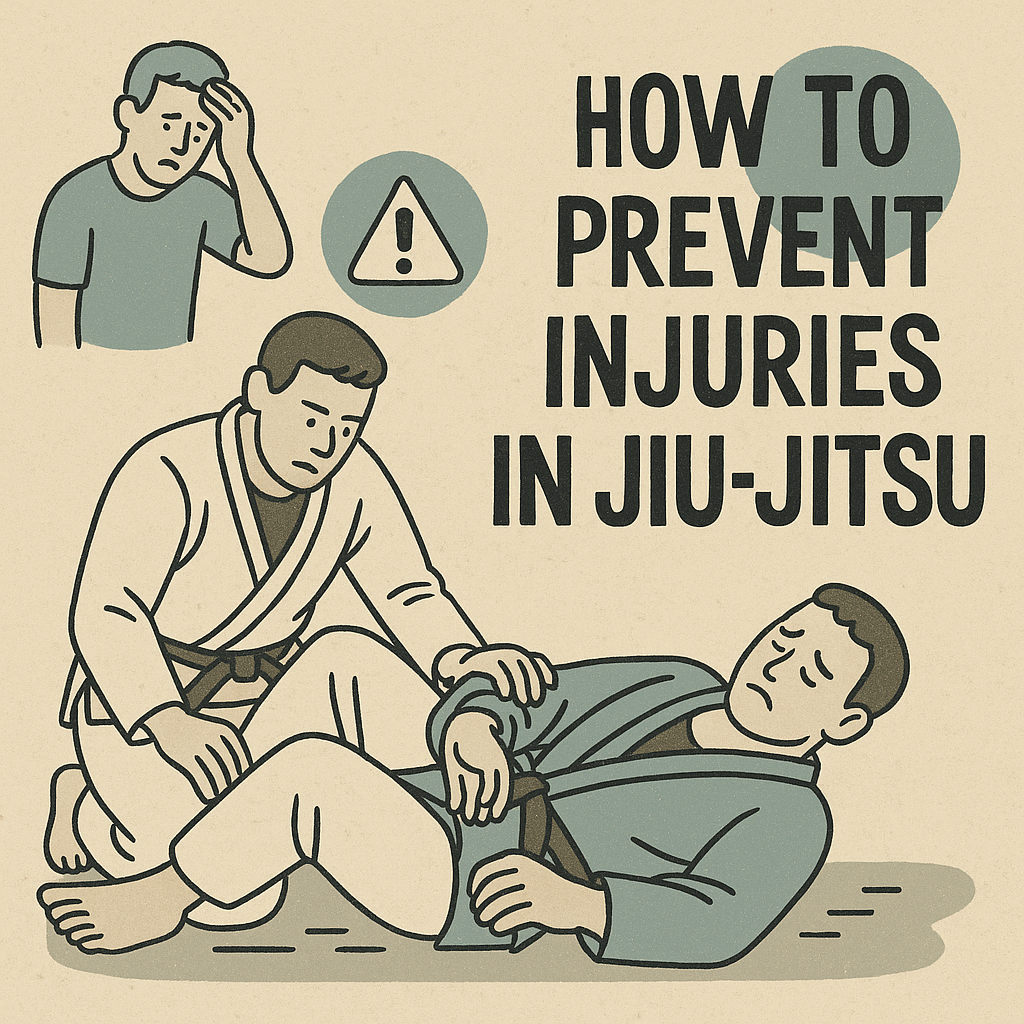

  • How to Prevent Injuries in Jiu-Jitsu (and Stay on the Mats Longer)

    How to Prevent Injuries in Jiu-Jitsu (and Stay on the Mats Longer)

    The Injury Loop (And How to Break Free)

    You’re finally picking up momentum in Jiu-Jitsu…

    Then boom—another injury.

    The nagging elbow that never seems to heal.

    The shoulder tweak that keeps coming back.

    You take a break to heal, but now your skills are slipping. Ever caught yourself thinking, “Is it always going to be like this?”

    You’re not alone:

    If you want to stop repeating this injury loop, you need a plan.


    1. Train Smart: Choose Your Partners Wisely

    To learn how to prevent injuries in Jiu-Jitsu, start by training smart, not recklessly. Trust is key. When practicing deep submissions or escape drills, your partner must respect your safety. Elite grapplers maintain a consistent, trusted core of training mates, not random irregulars.


    2. Tap Early, Tap Often

    Tapping early saves your training.

    One Redditor summed it up well:

    “It stops you quitting earlier in your BJJ lifespan due to injury … it definitely has potential to ALLOW you to get better.” pmc.ncbi.nlm.nih.gov+12reddit.com+12onepbjj.com+12submissionshark.com

    Delaying a tap can cause chronic injuries or worse youtube.com+6onepbjj.com+6elitesports.com+6. Tap today, train tomorrow—that’s how consistency wins.


    3. Get Better (Don’t Stay the Same)

    Remember that time you got caught in the same kimura repeatedly?

    That was a feedback loop:

    “That’s my fault. I need to fix the holes and come back stronger.”

    Every hole in your game isn’t just a skill gap—it’s a potential injury risk.


    4. Get Stronger (Stop Neglecting Strength Training)

    This should be titled #1! Studies show grappling athletes who lift heavy experience far fewer joint injuries. Strengthen your body to protect your joints—and your journey youtube.com+3reddit.com+3bjjnc.com+3en.wikipedia.org+5thesportjournal.org+5bjjselfhelp.com+5rollbliss.combjjnc.com+13injoma.com+13youtube.com+13pmc.ncbi.nlm.nih.gov.


    5. Warm-Up Like a Champ 🔥

    Behind every injury-free session is a quality warm-up.

    • Improves joint range, muscle readiness, and neuromuscular control scienceforsport.com.
    • Grappling warm-ups reduce injury rates by up to 75% injoma.com.
    • Include dynamic drills like shrimping, shoulder rolls, hip ops—simple yet effective .

    📌 At a Glimpse: Prevent Injuries in Jiu-Jitsu

    ✅ HabitBenefit
    Train with trusted partnersReduces surprise jerks & late taps
    Tap earlyAvoids chronic injuries
    Drill smartBuilds better defense and safer positions
    Strength trainProtects joints under stress
    Warm-up properlyPreps body, lowers injury risk

    Bottom Line: Stay Healthy, Stay Consistent

    If you want to get better at Jiu-Jitsu, you need time on the mats.

    Injuries kill momentum—and prevent you from mastering your craft.

    So invest in your body. Be intentional:

    • Choose partners wisely
    • Tap early
    • Fix your game
    • Strength train
    • Warm-up right

    Protect your mat-time. You’re here for the long game, not quick cuts.

    Stay safe, keep rolling.

    📣 Ready to Take Action?

    If you’re tired of waiting for motivation and ready to build the discipline that leads to real results, check out my other posts:

    Remember, the journey to success starts with a single disciplined step. Take that step today.

    Ready to Level Up Your Discipline?
    Check out my free PDF guide on building real strength through discipline, not motivation. If you’re serious about taking ownership of your goals, this is where it starts.
    👉 https://theanvarmethod.com/courses/
    And don’t forget to subscribe to my newsletter to get powerful, no-BS insights every week on performance, mindset, and mastery—straight to your inbox.

  • Jiu-Jitsu Is Hard (And That’s Why It’s Worth It)

    Jiu-Jitsu Is Hard (And That’s Why It’s Worth It)

    Jiu-Jitsu Will Challenge You Like Nothing Else

    I’ve trained my entire life. Since I was 12 or 13, I’ve been involved in different strength training disciplines—calisthenics, CrossFit, bodybuilding, powerlifting. I’ve also tried multiple martial arts, but nothing has challenged me like Brazilian Jiu-Jitsu (BJJ).

    I’ve spent the last 12–13 years on the mats, and if I’m fortunate, I’ll spend many more. Jiu-Jitsu is a lot of things—technical, rewarding, frustrating, humbling, addictive. But if I had to describe it in one word, I’d say:

    👉 It’s hard.

    When I received my black belt, I felt joy, a sense of accomplishment, and pride. But my coach’s words that day stuck with me:

    🗣 “You’re not done. The journey just begins. Jiu-Jitsu is a fresh product, like a flower—if you don’t water it, it will fade away.”

    And he was right.

    Jiu-Jitsu isn’t something you master and move on from. It’s something you constantly refine, relearn, and struggle through.

    Brazilian Jiu Jitsu’s links to mental health explored in new research study


    Jiu-Jitsu: The Human Chess Game

    They call BJJ “human chess” for a reason. Every roll is a game of strategy.

    You make a move, your opponent counters. You try to anticipate their next step while setting up your own attack. You get caught, analyze your mistakes, and troubleshoot for the next round.

    Unlike many martial arts, BJJ is endless.

    🔹 Judo focuses primarily on takedowns, with a small amount of ground control (newaza).
    🔹 Wrestling is almost entirely takedowns and pins.
    🔹 Boxing has a handful of core strikes—jab, cross, hook, uppercut—but the magic is in execution.

    Brazilian Jiu-Jitsu? You need to know everything:

    ✅ Takedowns
    ✅ Takedown defense
    ✅ Positioning
    ✅ Escapes
    ✅ Submissions
    ✅ Submission defense

    And just when you think you’ve got it all figured out, someone invents a new move.

    Jiu-Jitsu evolves constantly. If you aren’t learning, you’re falling behind.


    You Never Stop Learning

    At black belt, I thought I’d finally have the complete picture.

    ❌ Wrong.

    Only now do I have a broad enough understanding to start putting everything together at a higher level. It’s like reaching the top of a mountain—only to realize there’s another one in front of you.

    You never stop growing.

    You replay mistakes in the shower. You think about a submission you should’ve escaped. You obsess about that kimura you walked into last night.

    And that’s exactly why it’s so addictive.


    The Mental Game: Why Jiu-Jitsu Breaks People

    BJJ is physically demanding, but what makes it truly hard is the mental battle.

    The Comparison Trap

    You might think:

    ❌ “I suck, I’m getting tapped every round.”
    ❌ “Why do I feel like I’m getting worse?”
    ❌ “How is this white belt catching me?”

    We all do it.

    There’s constructive comparison (motivates growth), and destructive comparison (makes you want to quit).

    The solution?

    👉 Shut up and train. No one cares. Keep showing up.


    Hard Truths That Apply to Life Too

    1. Training More = Getting Better

    People want elite results on hobby-level effort. Doesn’t work like that.

    You wouldn’t train 2x/week in basketball and expect to play like Jordan.

    Same with Jiu-Jitsu. If you’re training 2–3x/week for fun—great. Enjoy it. But don’t compare yourself to 20-year-olds training 10 hours a week for Worlds.

    Be honest about your inputs and goals.

    Learning curve in complex skills / motor learning


    2. You’re Only as Good as Your Last Roll

    Roll great with a brown belt. Get smashed by a white belt next round.

    It’s normal.

    ✅ Higher belts? You’ve got nothing to lose.
    ✅ Lower belts? You’ve got everything to lose.

    Stop chasing perfection. Focus on consistency.


    3. You’re Probably Just a Few Inches Off

    You don’t suck.

    You’re just missing a detail or two.

    Like a golfer whose ball lands in the pond—the problem wasn’t where the ball landed, but how slightly off their swing was.

    Fix one thing at a time. That’s how mastery works.


    Conclusion: Keep Showing Up

    BJJ is 95% mental and 5% physical.

    Most people quit before they get good.

    If you want to win at Jiu-Jitsu (and life), follow this:

    🔥 Keep training. Enjoy the struggle. Don’t take it too seriously.

    And remember:

    🗣 “Jiu-Jitsu isn’t about talent. It’s about who’s left.” Chris Haueter

    Leave a comment—what’s the hardest thing you’ve had to learn in Jiu-Jitsu?

    Recommended Reading:

    Why you’re not seeing progress

    How to approach mastery in any skill

    How to speed up your learning in Jiu-Jitsu