Category: Fitness

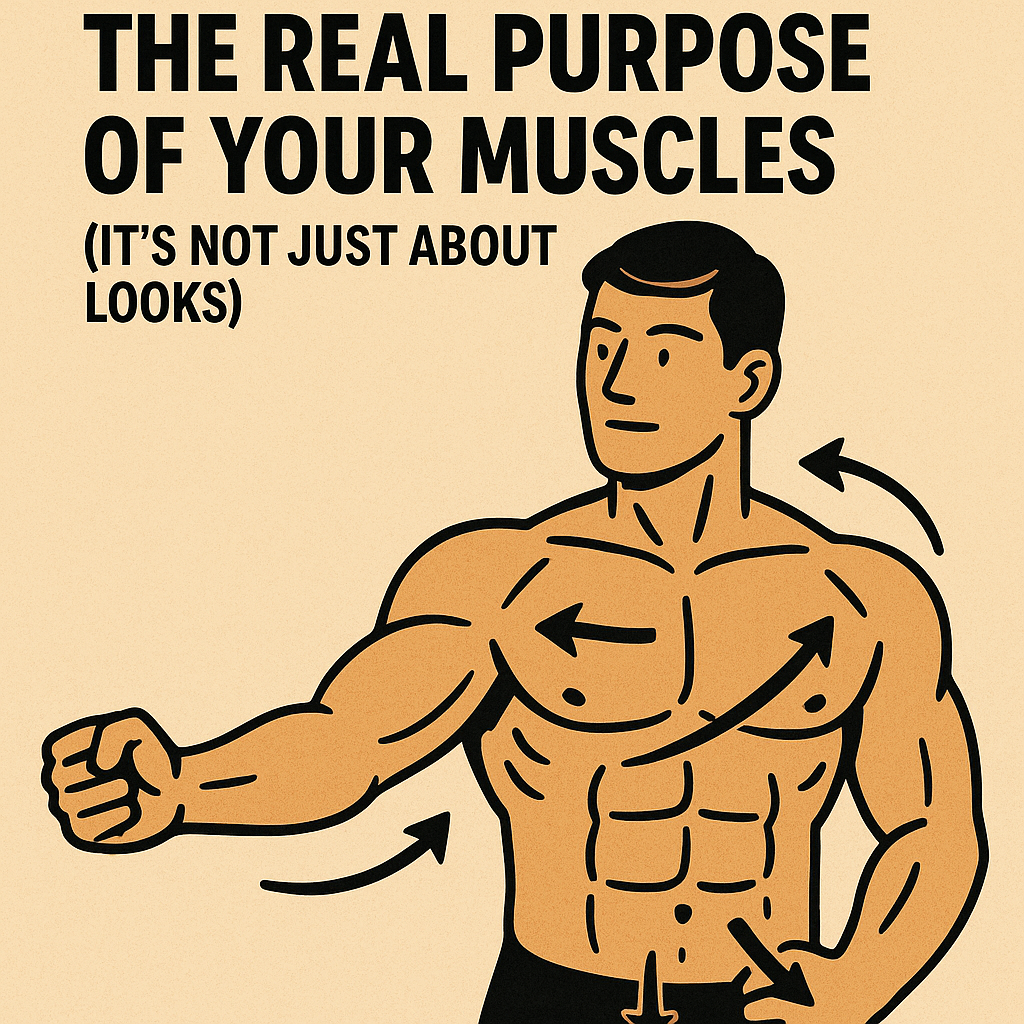
  • The Real Purpose of Your Muscles (It’s Not Just About Looks)

    The Real Purpose of Your Muscles (It’s Not Just About Looks)


    There’s a Reason You’re Built This Way

    There’s wisdom in how The Creator designed your body.

    Every part of you—your muscles, organs, senses—has a specific purpose.

    Your eyes face forward to see where you’re headed.

    Your nose is between your eyes and mouth so you can smell what you eat.

    Your core? It stabilizes your entire structure so you can stand tall, lift, push, pull, and move.

    Muscles aren’t decoration. They’re functional tools built for real life.

    • Pecs move your arms across your body.
    • Biceps pull your arm in.
    • Triceps extend your elbow.
    • Erector spinae protect your spine during lifting.
    • Core muscles brace your torso under load.

    Every muscle has a job. None of this was random.

    Why Injuries Happen (And Why Most Are Preventable)

    Here’s the hard truth:

    Most injuries happen not because of freak accidents—but because your body wasn’t prepared for the force it experienced.

    We’re talking normal stuff:

    • Lifting your kid
    • Picking up a box
    • Playing casual football
    • Cleaning the house

    If your muscles are weak—or your neural patterns aren’t conditioned for movement—you’re exposed.

    Pain is your body’s alarm saying, “I’m not ready for this.”

    🔥 Resistance Training as a Tool for Preventing and Treating Musculoskeletal Injuries

    Your Body Is a Trust—Treat It Like One

    As a Muslim, I believe the body is an amanah (trust) from God.

    You don’t return a borrowed car in worse condition than you got it—so why do that with your body?

    Taking care of it means:

    • Training your muscles
    • Strengthening your joints
    • Learning better movement patterns
    • Being physically prepared for everyday demands

    This isn’t about being elite. It’s about honoring the gift.

    Strength = Injury Prevention

    You don’t need to live in the gym.

    Two to three sessions a week. 45–60 minutes. Basic resistance training.

    That’s enough.

    We don’t skip brushing our teeth. Why skip training the structure that carries us through life?

    Training isn’t “extra.” It’s hygiene.

    Start before your back gives out. Before the shoulder tweaks. Before the knee collapses.

    Prehab > Rehab

    Most people don’t care about health—until something breaks.

    But smart people play offense.

    Sure, your chiropractor might crack your back or give you meds—but even he’ll tell you:

    “If you don’t build strength, this will come back.”

    Build the armor now.

    Muscle Mass = Longevity, Health, and Resilience

    Muscle mass is one of the strongest predictors of:

    • Longevity
    • Chronic disease protection (including cancer)
    • Stronger bones
    • Faster injury recovery with age

    📚 Muscle Mass and Risk of Chronic Disease and Mortality

    Training also helps mentally:

    🧠 Resistance training improves cognitive function and mental health

    It reduces anxiety, sharpens your mind, and boosts your mood.

    No pill can replicate that.

    The Problem With Training Just for the Mirror

    Social media’s flooded with six-packs and beach shots.

    But aesthetics ≠ strength.

    I like looking fit too—but that’s a byproduct. Not the mission.

    People isolate muscles for size—but forget their real function.

    When you train for movement and strength, the looks follow naturally.

    Focus on health. Strength. Function.

    Final Takeaway: Honor the Purpose of Your Body

    Muscles aren’t there just to look good on camera.

    They’re designed to:

    • Move
    • Lift
    • Push
    • Pull
    • Stabilize
    • Protect

    Don’t wait for injury to humble you.

    Train now. Respect the body you were given.

    Function over flex. Strength over show. Prehab, not rehab.


    📣 Ready to Take Action?

    If you’re tired of waiting for motivation and ready to build the discipline that leads to real results, check out my other posts:

    Remember, the journey to success starts with a single disciplined step. Take that step today.

    Ready to Level Up Your Discipline?
    Check out my free PDF guide on building real strength through discipline, not motivation. If you’re serious about taking ownership of your goals, this is where it starts.
    👉 https://theanvarmethod.com/courses/
    And don’t forget to subscribe to my newsletter to get powerful, no-BS insights every week on performance, mindset, and mastery—straight to your inbox.
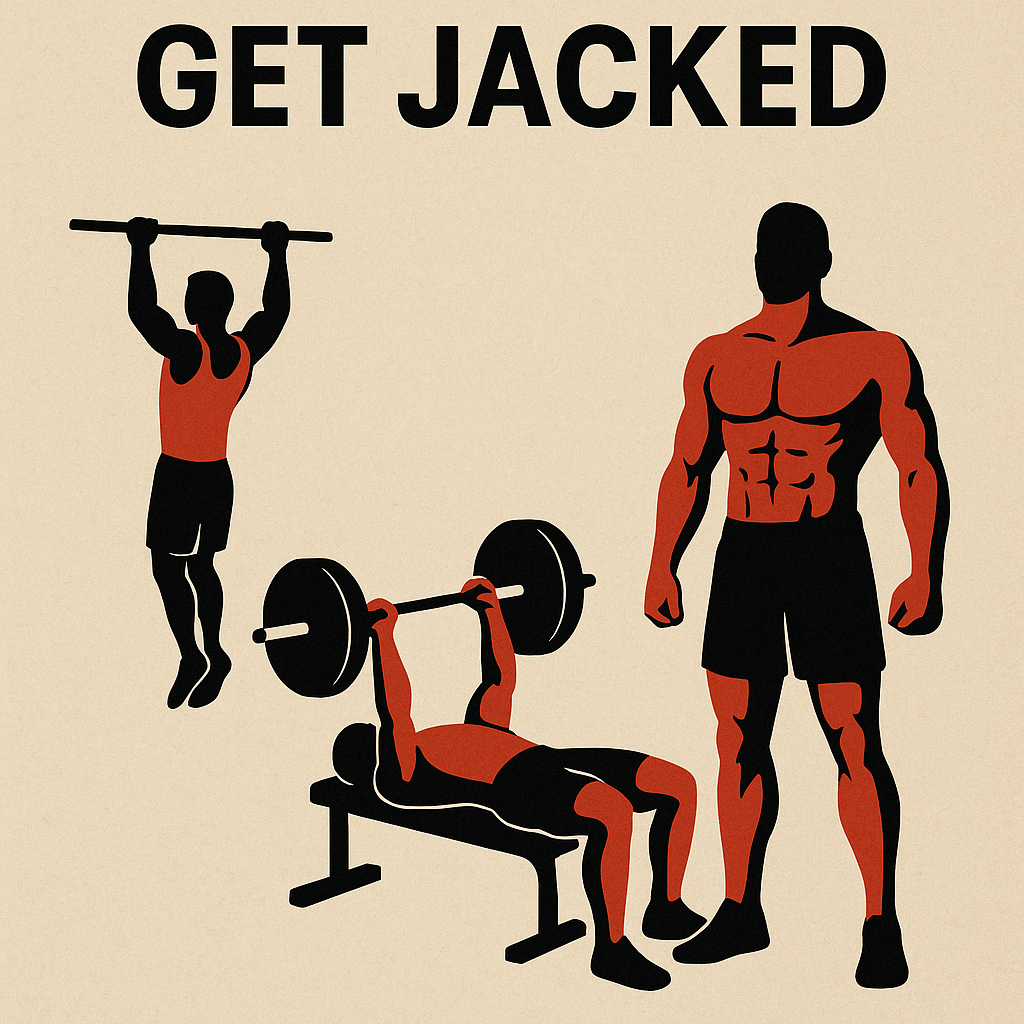
  • Get Jacked: Finding the Right Training Method for Your Goals

    Get Jacked: Finding the Right Training Method for Your Goals

    Get Jacked: Finding the Right Training Method for Your Goals


    What Does It Even Mean to “Get Jacked”?

    Before we talk about how to get jacked, let’s define what that actually means—because “jacked” can mean different things depending on who you ask.

    Are we talking about:

    • Getting lean and shedding fat?
    • Building muscle and strength?
    • Or both?

    Clarity matters. You’re more likely to reach your goal when you know exactly what that goal is. Vague goals lead to vague results. So, first things first: Get clear on what you’re after.


    My Story: Two Decades of Trying It All

    If you’re new here, quick background on me:

    I started training around the age of 13 or 14. Like many teenagers, my first goal was simple—lose some fat (especially around my face and belly) and get stronger. Back then, I didn’t have access to a gym, so I started with calisthenics.

    Fast forward 19 years, and I’ve dipped my toes into almost every style of training:

    • CrossFit
    • Powerlifting
    • Calisthenics / Gymnastics
    • Bodybuilding-style training
    • Running, swimming, martial arts

    Each method has its pros and cons. What works best often comes down to your personality, your lifestyle, and—most importantly—what you’ll actually stick with.

    One quote that stuck with me over the years is:

    “The best training is the one that gets done.”

    Doesn’t matter how good a plan looks on paper if you’re not consistent with it.


    Bodybuilding: The Aesthetic Approach

    If your goal is to build muscle size, shape, and definition—the classic “jacked” look—bodybuilding might be your lane.

    How It Works:

    Bodybuilding focuses on isolating muscle groups and hitting them with volume (higher reps, lower weights). Typical split routines might look like this:

    Example: Chest/Arms Day (3 sets of 8–12 reps)

    • Flat Bench Dumbbell Press
    • Incline Dumbbell Press
    • Dips
    • Dumbbell Military Press
    • Dumbbell Lateral Raises

    Pros:

    • Excellent for muscle hypertrophy (growth)
    • Focused on aesthetics and symmetry
    • Proven results—just look at competitive bodybuilders (even the natural ones)

    Cons:

    • Can feel repetitive and time-consuming
    • May lack functional strength if not paired with compound lifts
    • Might get boring if aesthetics aren’t your top priority

    Powerlifting: Strength First, Looks as a Bonus

    Powerlifting is all about getting strong. The focus is on the “big three” lifts:

    • Deadlift
    • Squat
    • Bench Press

    I personally lean toward powerlifting right now because I like the idea of training for strength first—and letting the aesthetics be a byproduct.

    Why Powerlifting Works:

    Even elite athletes in other sports use powerlifting movements to build strength, speed, explosiveness, and prevent injuries. Bodybuilders also sneak these in because compound lifts hit multiple muscle groups at once.

    Posterior Chain vs. Anterior Chain:

    • Posterior Chain: Backside muscles—glutes, hamstrings, lats, etc.
    • Anterior Chain: Frontside muscles—quads, core, pecs.

    Compound exercises work both chains and build a solid foundation of strength.

    Pros:

    • Functional strength that carries over to sports and life
    • Simple, focused training plan
    • Strength builds confidence

    Cons:

    • Requires good technique, especially as the weights get heavier
    • Higher learning curve to avoid injury (form matters!)
    • Some might find it less exciting if their main goal is aesthetics

    Read more on the benefits of strength training


    Calisthenics / Gymnastics: Bodyweight Mastery

    Calisthenics (basically gymnastics for the everyday person) focuses on controlling your own bodyweight. Think pull-ups, dips, handstands, muscle-ups.

    Why I Respect This Approach:

    Gymnasts are pound-for-pound some of the strongest athletes out there—especially in upper body and core strength. They’re also some of the leanest and most shredded.

    Pros:

    • Builds real-world strength and body control
    • No gym required (great for home or outdoor training)
    • Amazing for mobility, balance, and coordination

    Cons:

    • High stress on joints (wrists, shoulders, elbows) if not done smartly
    • Progressions can take time and patience
    • May lack lower-body strength if not paired with leg work

    Check out my story on calisthenics vs gym training


    CrossFit: High Intensity, High Risk?

    Here’s my honest take on CrossFit: It’s not for me.

    CrossFit combines elements from powerlifting, Olympic lifting, gymnastics, and HIIT—all under time constraints, often in a competitive setting.

    Why I’m Not a Fan:

    • Complex lifts + fatigue + racing the clock = recipe for injury
    • Form and technique suffer when time pressure kicks in
    • I prefer controlled circuit training at my own pace without the competition aspect

    That said, circuit training itself isn’t bad. Martial artists and wrestlers have used similar methods for decades—just with smarter programming.


    So… Which One Should You Choose?

    The truth? There’s no one-size-fits-all.

    Here’s my advice:

    • Try different methods. See what clicks.
    • Check your intention. Do you want aesthetics, strength, mobility, endurance—or a mix?
    • Be honest about what you enjoy. The best program is the one you’ll actually stick with.
    • Don’t be afraid to pivot. Your goals might change. Your training should too.

    Learn how to stay consistent and build momentum


    Final Thoughts: Just Commit (You Can Adjust Later)

    Stop overthinking. Pick something. Start. Stay consistent.

    If it’s not the right fit? Adjust. Pivot.

    But you can’t adjust what you never started.

    Getting jacked—whether that means strength, size, or just feeling better in your body—isn’t about the perfect plan.

    It’s about showing up and sticking with it long enough to see results.


    📣 Ready to Take Action?

    If you’re tired of waiting for motivation and ready to build the discipline that leads to real results, check out my other posts:

    Remember, the journey to success starts with a single disciplined step. Take that step today.

    Ready to Level Up Your Discipline?
    Check out my free PDF guide on building real strength through discipline, not motivation. If you’re serious about taking ownership of your goals, this is where it starts.
    👉 https://theanvarmethod.com/courses/
    And don’t forget to subscribe to my newsletter to get powerful, no-BS insights every week on performance, mindset, and mastery—straight to your inbox.