Author: Anvar Mammadov

  • Should You Hire a Personal Trainer? Here’s the Real Answer

    Should You Hire a Personal Trainer? Here’s the Real Answer

    The Start of My Fitness Journey (And Why I Wish I Had a Coach Back Then)

    I was 13 years old when I first got the spark.

    No fancy gym memberships. No YouTube tutorials. No Wi-Fi.

    Just a few blurry calisthenics videos shared between friends via Bluetooth—the old-school way. These guys were ripped, strong, and moving their bodies in ways that looked superhuman to me and my friends.

    Out of all of us who watched those videos, I was probably one of the few who decided to actually do something about it.

    Fast forward 20 years—and here I am, still on the journey, still learning. Still reading books, listening to podcasts, asking questions, studying the experts. And yes, still making mistakes (but a lot fewer than before).

    If I could go back in time and hire a personal trainer? I would’ve done it in a heartbeat.

    It would’ve saved me years of trial and error. Saved me from injuries. Saved me time.

    But back then, there weren’t many options. No social media, no easy access to information. Today? It’s all out there. Which makes this question even more important:

    Should YOU hire a personal trainer?


    Why Some People Never Consider a PT (And Why That’s a Problem)

    These days, I often see two types of people at the gym:

    • The person putting in the effort but clearly lost—doing exercises wrong, wasting time on ineffective routines.
    • The stubborn “I-know-it-all” type who’s been training for years with little to no progress but swears they “know how to train.”

    I’ve had countless conversations like this:

    “Hey, have you ever thought about hiring a coach or following a structured program?”
    “Nah, man, I’ve been doing this for years. I know what I’m doing.”

    Meanwhile, these same guys are paying $16K–20K a year for a luxury gym membership… but can’t figure out why they’re stuck.

    Effort doesn’t always equal progress. If your approach is wrong, results will never come.


    Who Should Hire a Personal Trainer?

    Here’s my honest take:

    ✅ New to the gym and don’t know where to start
    ✅ Never trained consistently for more than 6 months
    ✅ Overwhelmed by conflicting advice online
    ✅ Plateaued with your strength or physique
    ✅ Need accountability to show up and stick with it

    And here’s the kicker—even if you know what you’re doing, if you can afford it, you should still consider hiring a coach.

    Why? Because even the best need coaches.

    I’m a black belt in Brazilian Jiu-Jitsu. I’ve been training strength for two decades. I write about fitness. I coach people myself.

    But I still have my own coach.


    Why Even Experienced Athletes Hire Coaches

    It’s not about lack of knowledge.

    It’s about:

    • Objective feedback
    • External accountability
    • Smarter programming without ego

    Sometimes, all it takes is someone from the outside giving you structure, corrections, and that extra push.

    I’ve talked to elite athletes across multiple sports—they all say the same thing: a coach gives you perspective and performance you can’t get solo.

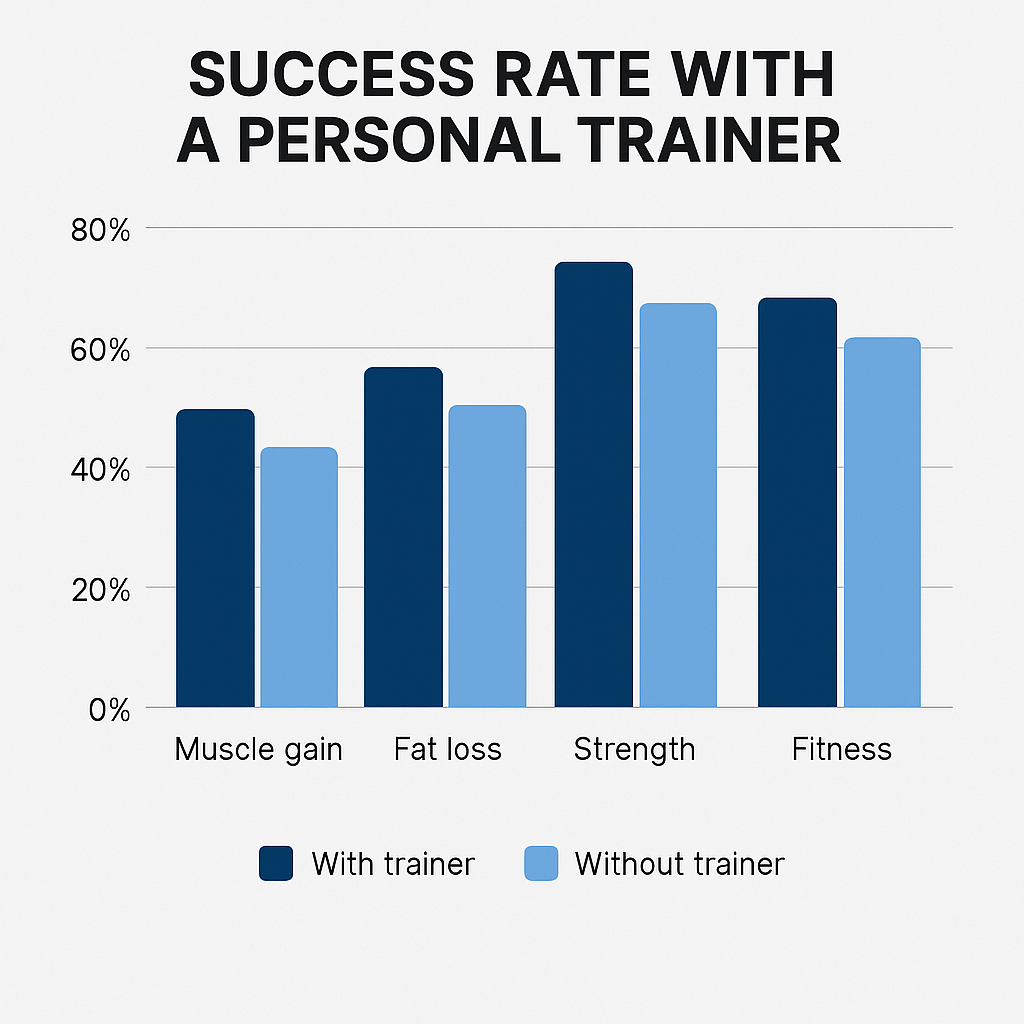
    Certified benefits: Studies show personal trainers significantly improve fat loss, muscle gain, exercise adherence, and injury prevention versus training solo (source).


    The Real Benefits: What a PT Actually Brings

    Here’s what a good trainer actually delivers:

    1. Form & Injury Prevention
      Prevent common gym injuries by fixing your movement patterns on the spot.
    2. Tailored Programming
      Based on your goals, not a generic influencer “split.”
    3. Accountability & Structure
      You show up. You train harder. You stick with it.
    4. Time Efficiency
      Avoid wasting months doing things wrong. Train smart, not just hard.
    5. Long-Term Results
      Not just aesthetics. Strength, health, mobility, and sustainability.

    When You Probably Don’t Need a PT

    The only good reason not to hire a coach?

    💰 Financial limitations

    Or…

    ✅ You’re consistent, disciplined, and can stick to a structured plan
    ✅ You already know how to perform movements safely
    ✅ You’re actively progressing and not plateaued

    If that’s you? Keep pushing. Otherwise, a PT might be exactly what you need.


    Final Takeaway: Is Hiring a PT Worth It?

    Yes. In most cases, 100%.

    A good coach isn’t an expense—it’s an asset. You’ll move faster, avoid injuries, and get smarter about training.

    If I had a coach 20 years ago, I would’ve avoided so many injuries, wasted months, and setbacks. I don’t regret the grind—but I know how much smoother it could’ve been.

    If you’re serious about results, consider the time and energy you’ll save. It’s not just about reaching goals—it’s about doing it sustainably.

    This image has an empty alt attribute; its file name is 8096200b-63ab-4b47-a51f-b43461575ef7.png


    🚀 Next Steps

    1. Decide why you want to improve—accountability, technique, or faster progress?
    2. Interview trainers—ask about results, credentials, and style.
    3. Commit for 4–6 weeks—assess progress, tweak if needed, and stay consistent.

    Even one session per week with the right coach can completely shift your results.
  • The Real Purpose of Your Muscles (It’s Not Just About Looks)

    The Real Purpose of Your Muscles (It’s Not Just About Looks)


    There’s a Reason You’re Built This Way

    There’s wisdom in how The Creator designed your body.

    Every part of you—your muscles, organs, senses—has a specific purpose.

    Your eyes face forward to see where you’re headed.

    Your nose is between your eyes and mouth so you can smell what you eat.

    Your core? It stabilizes your entire structure so you can stand tall, lift, push, pull, and move.

    Muscles aren’t decoration. They’re functional tools built for real life.

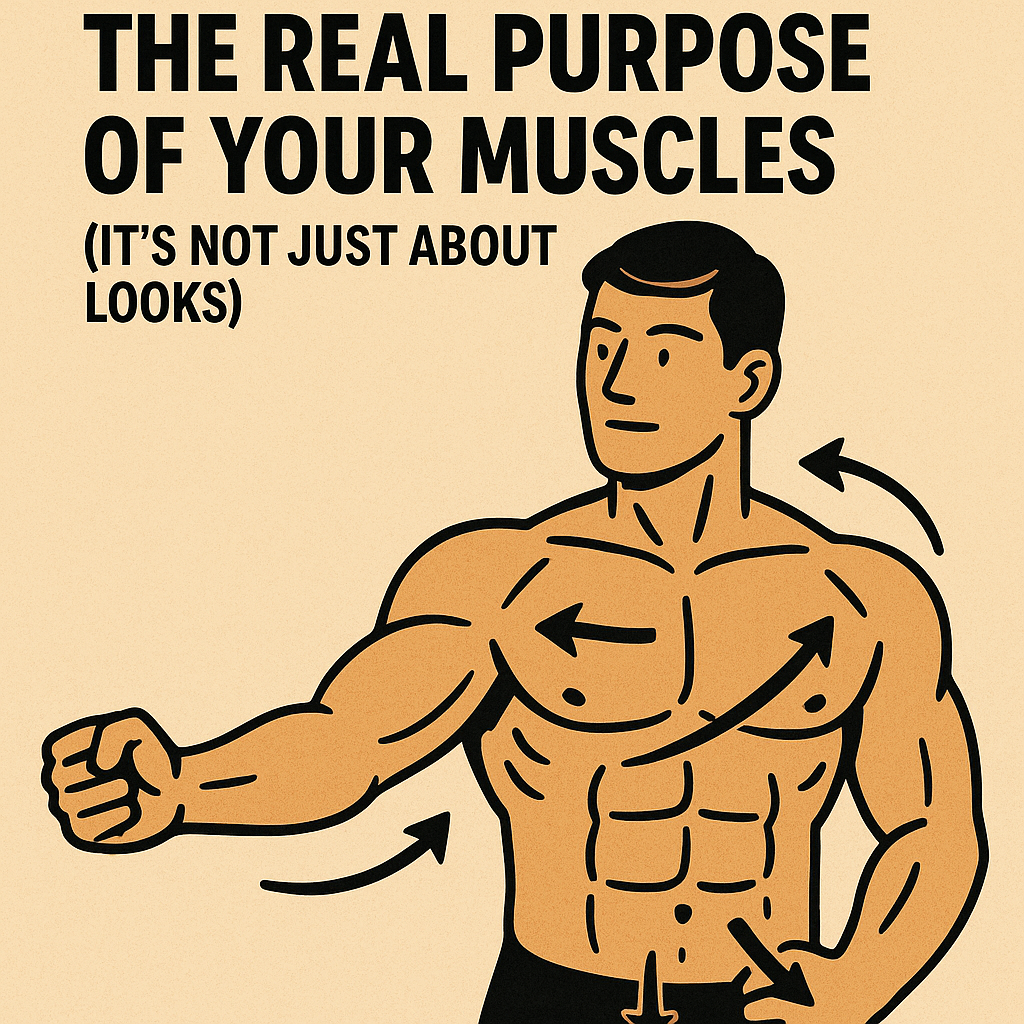
    • Pecs move your arms across your body.
    • Biceps pull your arm in.
    • Triceps extend your elbow.
    • Erector spinae protect your spine during lifting.
    • Core muscles brace your torso under load.

    Every muscle has a job. None of this was random.

    Why Injuries Happen (And Why Most Are Preventable)

    Here’s the hard truth:

    Most injuries happen not because of freak accidents—but because your body wasn’t prepared for the force it experienced.

    We’re talking normal stuff:

    • Lifting your kid
    • Picking up a box
    • Playing casual football
    • Cleaning the house

    If your muscles are weak—or your neural patterns aren’t conditioned for movement—you’re exposed.

    Pain is your body’s alarm saying, “I’m not ready for this.”

    🔥 Resistance Training as a Tool for Preventing and Treating Musculoskeletal Injuries

    Your Body Is a Trust—Treat It Like One

    As a Muslim, I believe the body is an amanah (trust) from God.

    You don’t return a borrowed car in worse condition than you got it—so why do that with your body?

    Taking care of it means:

    • Training your muscles
    • Strengthening your joints
    • Learning better movement patterns
    • Being physically prepared for everyday demands

    This isn’t about being elite. It’s about honoring the gift.

    Strength = Injury Prevention

    You don’t need to live in the gym.

    Two to three sessions a week. 45–60 minutes. Basic resistance training.

    That’s enough.

    We don’t skip brushing our teeth. Why skip training the structure that carries us through life?

    Training isn’t “extra.” It’s hygiene.

    Start before your back gives out. Before the shoulder tweaks. Before the knee collapses.

    Prehab > Rehab

    Most people don’t care about health—until something breaks.

    But smart people play offense.

    Sure, your chiropractor might crack your back or give you meds—but even he’ll tell you:

    “If you don’t build strength, this will come back.”

    Build the armor now.

    Muscle Mass = Longevity, Health, and Resilience

    Muscle mass is one of the strongest predictors of:

    • Longevity
    • Chronic disease protection (including cancer)
    • Stronger bones
    • Faster injury recovery with age

    📚 Muscle Mass and Risk of Chronic Disease and Mortality

    Training also helps mentally:

    🧠 Resistance training improves cognitive function and mental health

    It reduces anxiety, sharpens your mind, and boosts your mood.

    No pill can replicate that.

    The Problem With Training Just for the Mirror

    Social media’s flooded with six-packs and beach shots.

    But aesthetics ≠ strength.

    I like looking fit too—but that’s a byproduct. Not the mission.

    People isolate muscles for size—but forget their real function.

    When you train for movement and strength, the looks follow naturally.

    Focus on health. Strength. Function.

    Final Takeaway: Honor the Purpose of Your Body

    Muscles aren’t there just to look good on camera.

    They’re designed to:

    • Move
    • Lift
    • Push
    • Pull
    • Stabilize
    • Protect

    Don’t wait for injury to humble you.

    Train now. Respect the body you were given.

    Function over flex. Strength over show. Prehab, not rehab.


    📣 Ready to Take Action?

    If you’re tired of waiting for motivation and ready to build the discipline that leads to real results, check out my other posts:

    Remember, the journey to success starts with a single disciplined step. Take that step today.

    Ready to Level Up Your Discipline?
    Check out my free PDF guide on building real strength through discipline, not motivation. If you’re serious about taking ownership of your goals, this is where it starts.
    👉 https://theanvarmethod.com/courses/
    And don’t forget to subscribe to my newsletter to get powerful, no-BS insights every week on performance, mindset, and mastery—straight to your inbox.

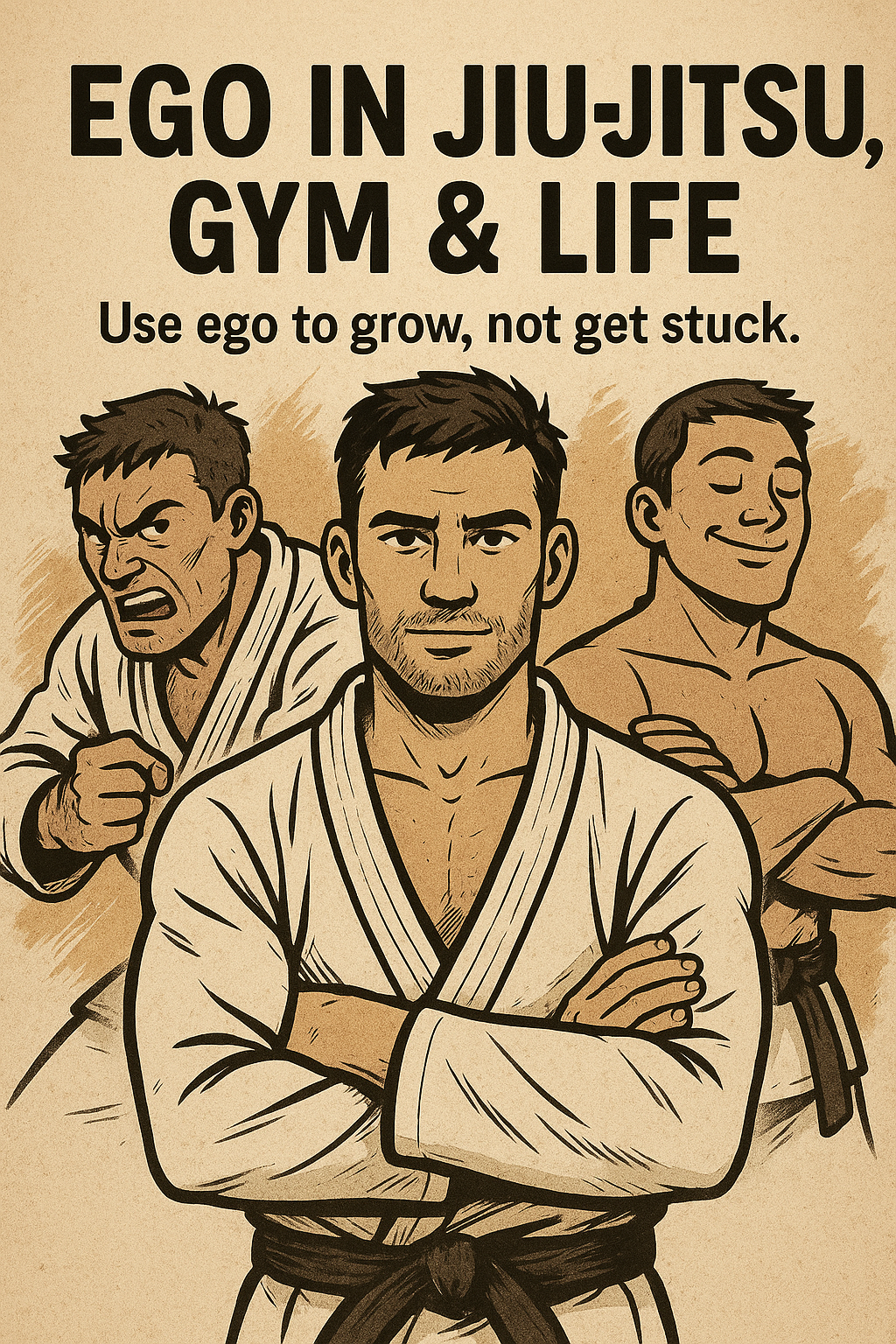
  • Ego: Your Ally in BJJ, Gym Training & Everyday Growth

    Ego: Your Ally in BJJ, Gym Training & Everyday Growth


    Ego in Jiu‑Jitsu, gym, and life shows up everywhere…

    Ego—it’s a powerful force.
    It’s not strictly bad or good; it can push you to greatness—or drag you into drama.

    Since day one in Jiu-Jitsu, I heard: “Leave your ego at the door.”
    Fair enough. BJJ humbles any human. But it’s also a human behavior worth exploring.

    As I like to say: “The observant person finds many teachers.”
    I’m driven by reflection—learning from every roll, every failure, every conversation.

    Ego shows up everywhere: on the mats, in the gym, in our lives. Let’s dive in.


    1. Ego in Jiu-Jitsu: Poker Face? Not Possible.

    In BJJ, ego never leaves the room—but how you use it matters.

    🔴 The Bad Ego

    After 13 years of rolling, I’ve seen it all:

    • The friendly athlete outside class who turns into a ruthless grinder when the gi goes on.
    • A partner who bites or scratches intentionally.
    • A Black Belt slapping a blue belt with a fast wristlock—and blaming them instead of checking if they’re okay.
    • A blue belt pleading, “Brother, take it easy—I’m just coming back,” only to be met with pride, not kindness.

    That ego blocks learning. It prevents taps. It fuels injury.

    My approach? If I’m caught in a move, I own it, tap early, and hit the books to fix it.
    Training isn’t about toughness. It’s about skill.

    🟢 The Good Ego

    Your ego can push you to make gains, study more, fix holes in your game, and chase consistent progress.
    This competitive ego—*“I want to improve, I want to get better”—*is fuel. Not arrogance.

    Some Black Belts use their rank as a shield to look down on others—don’t be that person.
    Instead, let your ego motivate constructive accountability and resilience.

    The Gentle Art of Humility: Ego and Brazilian Jiu‑Jitsu


    2. Success Shows Your Real Colors

    Want to know who someone truly is? Give them success, money, or recognition—and watch how they respond.

    Sure, some say “money corrupts.”
    But I’ve seen wealthy men who are kind, humble, and generous.
    Meanwhile, some broke or average people act like jerks.

    Achievement is a spotlight—it doesn’t cause flaws; it reveals them.

    If you were giving before success, chances are you’ll give more after it.
    If you valued humility before, you’ll stay humble later.
    That’s reputation.


    3. Ego in Everyday Life

    Real growth means staying open—listening, learning, asking questions.

    When your ego says, “I know this,” beware.
    I’ve learned from kids younger than me, from older sages, from people across cultures—because I’m open to truths.

    When I doubt, I say: “Tell me why I could be wrong.”
    I’ll research, test, and return with what I found.
    Not to prove I was right or wrong—but to keep the conversation moving forward.

    The ego that says only you are right is the ego of insecurity and stagnation.

    Ego Is the Enemy of Good Leadership
    Character Is Revealed in Success, Not Just Failure


    4. Ego in the Gym: Train Smart, Stay Humble

    Gyms are breeding grounds for ego—especially when some folks treat personal training clients like they own the mirror.

    Every gym instinct I’ve had—every time someone asked for technique feedback—I’ve seen two choices:

    1. Right or learn.
      ➤ If you’re wrong, thank them. Tell them you’ll check on it.
      ➤ If you’re right, share why—and help them learn too.

    There is no third option.
    Remember: “…It’s not shame not to know; it’s shame not to learn.” —My dad

    What Are Character Strengths & Virtues?


    ✅ Final Takeaways: Your Ego, Your Choice

    • Don’t suppress ego. Use it. For accountability, growth, and staying honest with yourself.
    • Be open—stay wrong occasionally. That’s where growth lives.
    • Let success amplify who you already are. It won’t fix character—you must build that yourself.
    • Tap early, learn hard. On the mats and in life. That’s how your ego becomes an asset.

    Ego isn’t the enemy.
    It’s a tool. Use it wisely.


    📣 Ready to Take Action?


    If you’re tired of waiting for motivation and ready to build the discipline that leads to real results, check out my other posts:

    Remember, the journey to success starts with a single disciplined step. Take that step today.

    Ready to Level Up Your Discipline?
    Check out my free PDF guide on building real strength through discipline, not motivation. If you’re serious about taking ownership of your goals, this is where it starts.
    👉 https://theanvarmethod.com/courses/
    And don’t forget to subscribe to my newsletter to get powerful, no-BS insights every week on performance, mindset, and mastery—straight to your inbox.

  • How to Improve Faster in Jiu-Jitsu (No Gimmicks, Just Results)

    How to Improve Faster in Jiu-Jitsu (No Gimmicks, Just Results)


    Jiu-Jitsu Isn’t a Shortcut—Here’s Why

    There’s this myth floating around in the martial arts world:

    “Jiu-Jitsu is different. You don’t need conditioning. You can skip warm-ups. You can train less and still get ahead.”

    Sound familiar?

    Yeah—complete nonsense.

    Let’s be clear:
    Jiu-Jitsu is not magic. It’s a skill—and like any real skill, it demands reps.

    BJJ came from Judo. Judo came from classical Japanese jiu-jitsu. It’s built on leverage—so a smaller person can defend and submit a bigger one.

    But somewhere along the way, leverage became an excuse.

    “I don’t need to drill.”
    “I don’t need strength work.”
    “I can just roll and figure it out.”

    That mindset will keep you stuck at the same belt… or worse, injured and out.


    What Makes BJJ Unique (And Why You Still Need Work)

    Yes—Jiu-Jitsu is different from other martial arts:

    • No striking
    • Slower tempo than wrestling or judo
    • Technical ground game
    • You can “rest” in some positions

    That makes it beautiful for people who aren’t naturally explosive.

    But leverage isn’t a replacement for effort—it multiplies the effort you apply.


    The Ugly Truth: You Can’t Cheat Time on the Mats

    I get this question a lot:

    “How can I get better faster?”
    “How long to get to blue belt? Purple belt?”

    Usually from people who train twice a week—sometimes less.

    Here’s the truth:
    You can’t shortcut mat time.

    You can train smarter. But you still need volume.

    Think about any serious skill—surgeon, pilot, architect.
    You wouldn’t trust someone who skipped their reps.

    Why should BJJ be different?


    Stop Reinventing the Wheel

    Social media is full of garbage takes:

    “Warm-ups are a waste of time.”
    “Drilling is useless.”
    “You don’t need strength work.”

    Meanwhile…
    Olympic wrestlers, judokas, and top competitors drill, warm up, and condition religiously. It works. It’s tested.

    If it works for elite grapplers, why would we pretend we’re smarter than them?

    Don’t get sucked in by viral coaches who value likes over truth.


    How to Improve Faster in Jiu-Jitsu (What Actually Works)

    Here’s how to accelerate your progress without burning out or getting injured:

    1. Drill Until It’s Automatic

    Reps, reps, and more reps.
    Your body should know what to do before your brain catches up.
    That’s how you create reliable performance under pressure.
    “According to motor learning theory, repetition and rehearsal are key to mastering motor skills—it’s why drilling unlocks ‘muscle memory’”
    ➡️ Motor learning theory on why repetition works


    2. Specific Sparring

    Work one problem at a time.
    Mount escapes. Guard retention. Passing.
    Set up rounds where you start in that position and reset every time.

    ➡️ Why positional sparring builds skill faster


    3. Strength & Conditioning

    Not for looks—for injury prevention and performance.
    Being stronger = better frames, tighter pressure, safer joints.
    ➡️ Study: S&C improves function and injury resistance in grappling


    4. Stretch & Mobility Work

    Stay limber. Move well.
    Tight hips and shoulders = injuries waiting to happen.


    5. Study the Game

    Watch your own rolls.
    Watch higher belts.
    Study where you get stuck.
    Write it down. Fix it.


    6. Consistency Over Everything

    2x per week > 0.
    3x per week > 2.
    The best plan is the one you actually follow.


    7. Choose Your Partners Wisely

    Train with people who don’t crank subs or go full ego.
    Especially in vulnerable positions.


    8. Get Privates If You Can

    A single private can save you months of confusion.
    If you can afford it, it’s the most direct path to targeted progress.


    Train Smart: When to Go Hard and When to Recover

    You don’t need to roll at 100% every round.

    Hard rounds test you.
    Light rounds teach you.

    If you’re 35+, recovering from injury, or not chasing medals—be smart.
    Intensity without recovery is just wear and tear.


    Mindset Rules: Keep Your Jiu-Jitsu Progress Strong

    Don’t chase belts.
    Don’t compare your path.
    Don’t fall for flashy YouTube shortcuts.

    Instead:

    • Show up
    • Drill with intent
    • Roll with focus
    • Study your mistakes
    • Recover well
    • Repeat

    As Royce Gracie said:

    “The belt only covers two inches of your ass. You have to cover the rest.”


    Final Thought: Trust the Process

    Jiu-Jitsu is a gift.

    Not everyone gets to do this.
    Life, injuries, or circumstances stop a lot of people.

    So if you’re on the mats—you’re blessed.

    Train with intention.
    Stick to what works.
    Skip the noise.

    The results will come.


    🔗 Read Next:

    • [The 18‑Minute Rule – Why Mastery Is Easier Than You Think]
    • [Jiu‑Jitsu Is Hard – Why It Breaks Most Men (And Why You Should Still Train)]
    • [The Real Reason You’re Not Making Progress – And How to Fix It]


    📣 Want More Like This?

    If you’re tired of fluff and ready to build real strength, mindset, and durability—subscribe to my free newsletter.
    Every week, I share no‑BS strategies for discipline, performance, and growth.

    👉 [Join Here]


  • How to Be the Most Interesting Person in the Room (Without Tricks)

    How to Be the Most Interesting Person in the Room (Without Tricks)

    Why Some People Command Attention (And How You Can Too)

    Ever seen that one person at a gathering?
    The one whose words make the room quiet—everyone leans in, even when someone else is speaking.

    People call it charisma.
    I call it earned credibility.

    It’s not about storytelling hacks.
    It’s about having lived something worth talking about.


    My Proof: Not Hype, Just History

    People listen when I speak—not because of gimmicks or titles—but because I’ve lived through:

    • 13+ years in martial arts, including a BJJ black belt
    • 20 years of strength training: from calisthenics to CrossFit
    • Deep dives into nutrition: intermittent fasting, high-fat, low-carb
    • Lived in 3 countries, dealt with racism, bullying, and near-death experiences
    • Foster care background, fluency in 5 languages, and finding Islam along the way

    These aren’t “talking points”—they’re real.
    And they give me something worth sharing.

    The list of experiences is long, but this post isn’t about me. It’s about how you can build that kind of presence too.


    1. Build Expertise (Broad & Deep)

    Why it matters:

    Real mastery builds trust. Curiosity builds interest. [How to Actually Learn Anything].

    Go Broad:
    Read widely. Learn new perspectives. Follow threads deeper than most do [How to Actually Learn Anything].
    Lifelong learning increases cognitive resilience and creativity [Harvard Study on Curiosity].

    Go Deep:
    Pick your niche—BJJ, strength training, climbing, whatever—and become the go-to voice in your circle.

    📌 Knowledge in action = influence.


    2. Get More Experience (Live More)

    You want depth? You need life reps.

    Take on challenges. Travel. Teach. Fail. Lead. Serve.
    Get in the arena.

    But be smart:
    ✅ Don’t chase chaos
    ✅ Don’t fake experiences
    ✅ Do hard things with intention [Success Requires Sacrifice].

    That’s how you gain insights others don’t have.


    3. Reflect Deeply (Observe & Connect)

    Experience without reflection is noise.

    As Socrates said:

    “The unexamined life is not worth living.”

    Modern research backs this—reflection strengthens your problem-solving, emotional regulation, and long-term memory [The Use Of Reflective Practices; Reflective practice].

    Ask yourself:

    • What did I learn?
    • What went wrong?
    • What would I change next time?

    Reflection turns your life into lessons.
    And people listen to lessons.


    4. Speak It, Don’t Fake It

    Forget the charisma hacks.
    Share what you’ve lived.

    Be the one who’s been through the fire, not the one who studied heat.

    People don’t want perfection.
    They want truth.

    And the most interesting people in the room?
    They’ve earned their voice.


    ✅ Final Takeaway: Be Real. Be Useful. Be Interesting.

    To become the most interesting person in the room:

    • Build it: Deep skills + broad curiosity
    • Live it: Do real, hard things
    • Reflect on it: Extract insight
    • Speak it: No drama, just earned truth

    No gimmicks.
    Just a lived life, communicated with clarity.


    🔗 Read Next:


    📣 Want More Like This?

    If you’re tired of fluff and ready to build a disciplined life that actually works, subscribe to my free weekly newsletter:
    No-BS insights on strength, mindset, and performance.
    👉 Join Here

    Start building the kind of strength—mental, physical, and spiritual—that actually lasts.

  • Money Can’t Buy This: The Priceless Things That Truly Matter

    Money Can’t Buy This: The Priceless Things That Truly Matter


    Chasing Growth: Why I Started This Journey

    I can’t pinpoint exactly what sparked my obsession with self-improvement.

    Maybe it was childhood adversity. Maybe dropping out of high school. Maybe it was the chip on my shoulder from always feeling behind.

    But at 13, I discovered a simple truth:

    👉 If I put in the work, I get results.

    That was all I needed. I became addicted to growth—strength training, books, martial arts, psychology, spirituality, business, sales, nutrition. If it helped me level up, I consumed it.

    As Jim Rohn said:

    “How tall does a tree grow? As tall as it can.”

    So why limit myself?

    Why should you?


    The Myth of Buying Success

    Some people get lucky. Born rich. Smooth path. Good for them.

    But here’s reality:

    The most valuable things in life aren’t for sale.

    They cost something deeper: discipline, time, effort.

    Here are three things money can’t buy—but you can earn.


    1. Health & Strength (Earned, Not Bought)

    You can’t swipe a card and buy a strong, capable body.

    You can hire a trainer. Buy supplements. Get fancy gear.

    But nobody can lift for you. Nobody can show up for you.

    💡 Health is earned. Through reps, routine, and responsibility.

    I’ve seen wealthy guys neglect their bodies. They chase business wins, then crash because their foundation—health—is weak.

    Strength isn’t just about looking good. It fuels your energy, mood, cognition, and longevity.

    The gym doesn’t care about your income. It rewards discipline.

    Regular exercise guards against heart disease, improves blood pressure and cholesterol, and boosts mental clarity—benefits that even the best supplements can’t match. 


    2. Real Intelligence (Not IQ or Credentials)

    You don’t need a degree to be smart.

    You need curiosity. Hunger. Self-discipline.

    I’ve learned more from books, mentors, and real-world struggle than any school ever taught me.

    True intelligence is knowing how to think, how to apply, and how to adapt.

    📌 “Lifelong learning” isn’t a motivational poster—it’s a competitive edge.

    And here’s the best part? Most of the best wisdom is cheap or free.


    3. Good Manners & Character (Character Can’t Be Bought)

    You can have millions and still be a coward. Or a fraud. Or a snake.

    But good manners? That’s real currency.

    It’s how you treat your wife, your mother, your brothers. It’s what you do when no one’s watching.

    • Do you listen?
    • Do you tell the truth, even when it’s hard?
    • Do you keep your word?

    As the Prophet Muhammad ﷺ said:

    “Whoever is kind, affable, and easy-going, Allah will forbid him from entering Hellfire.”
    (Al-Sunan Al-Kubrá lil-Bayhaqī 20806)

    Money buys followers. Character earns respect.


    The Real Currency of Life

    The world says success = power, followers, money.

    But here’s real wealth:

    • A body you can rely on
    • A sharp, adaptable mind
    • Deep values and unwavering character
    • A life of service, meaning, and faith

    That’s not bought. It’s built. Through sweat, sacrifice, and self-respect.


    Final Word: Don’t Settle for Average

    You’re not here to coast.

    You’re here to grow.

    → Build your body.
    → Sharpen your mind.
    → Forge your spirit.
    → Elevate your skills.

    Money can’t buy these—but your discipline can earn them.

    Be the tree that grows as tall as it can.


    📣 Ready to Take Action?

    If you’re tired of waiting for motivation and ready to build the discipline that leads to real results, check out my other posts:

    Remember, the journey to success starts with a single disciplined step. Take that step today.

    Ready to Level Up Your Discipline?
    Check out my free PDF guide on building real strength through discipline, not motivation. If you’re serious about taking ownership of your goals, this is where it starts.
    👉 https://theanvarmethod.com/courses/
    And don’t forget to subscribe to my newsletter to get powerful, no-BS insights every week on performance, mindset, and mastery—straight to your inbox.

  • Circle & Friends: Why Who You Surround Yourself With Shapes Your Life

    Circle & Friends: Why Who You Surround Yourself With Shapes Your Life

    A Friend Pulls (For Better or Worse)

    There’s an Arabic saying:
    “A friend pulls.”

    Meaning: a friend will influence your direction—whether good or bad.

    I speak five languages (and a bit of a sixth), and I’ve found versions of this wisdom in every culture I’ve encountered. The phrasing may change, but the truth stays the same.

    Take a moment to reflect on your life—the habits you’ve formed, the hobbies you’ve picked up, even some of your major life choices. If you trace them back, you’ll likely find a friend at the beginning of the trail:

    • The friend who introduced you to training or martial arts
    • The one who got you into smoking or drinking
    • The friend who inspired you to pray, learn, and grow
    • Or the one who led you into vices or poor decisions

    One of the most beautiful sayings of the Prophet Muhammad ﷺ captures this dynamic perfectly:

    “The example of a good friend and a bad friend is like that of a perfume seller and a blacksmith. The perfume seller may gift you some perfume, or you might buy from him, or at least enjoy the pleasant fragrance. As for the blacksmith, he might burn your clothes, or at the very least, you will breathe in the repugnant smell.”
    (Sahih Al-Bukhari & Muslim)

    Whether your circle lifts you or drags you—that’s your responsibility.


    The Power of Your Circle: Why Friends Matter

    Today, every self-help guru echoes the same line:
    “You’re the average of the five people you spend the most time with.”

    And it’s not wrong. But here’s the twist many miss:

    It’s not just about surrounding yourself with millionaires or “successful” people.

    • A person can have wealth and lack wisdom.
    • They might be confident yet morally bankrupt.
    • They could look strong but be spiritually weak.

    The right circle doesn’t just grow your bank account—it strengthens your character.

    They challenge your thinking, check your behavior, and hold you accountable.

    And the science backs it up. Research from Harvard Health shows strong social connections improve well-being, extend life expectancy, and buffer against mental decline.


    My Life Changed Because of My Friends

    This isn’t theory—it’s personal.

    I started martial arts because of a friend.

    Moved to Dubai because of a friend.

    Found faith, started praying, and became Muslim because of a friend.

    Avoided destructive paths and overcame toxic habits—because of the influence of good friends.

    And when I lost my dear ones?
    It was my friends who stood by me, checked in, and pulled me through.

    But I’ve seen the other side too. The wrong friends once pulled me into fights, reckless choices, and painful regrets.

    That’s why I’m ruthless about who I let close.


    How I Choose My Friends (And Why You Should Too)

    Not everyone you know is a real friend.

    A true friend carries influence in your life. And that influence needs to be earned.

    Here’s the checklist I use to decide who stays close:

    • ✅ Believes in God (shares my core values)
    • ✅ Honest, even when it’s uncomfortable
    • ✅ Has integrity and strong moral grounding
    • ✅ Puts effort into health, mindset, and discipline
    • ✅ Gives and receives critique with care
    • ✅ Genuinely cares and shows up when needed
    • ✅ Challenges me to grow—not just stay comfortable

    This isn’t judgment. It’s intentionality.

    I want friends who speak the truth with love—even when it’s hard. Especially when it’s hard.


    The Heart of Real Friendship

    Not all readers of this blog may share my faith—and that’s okay.

    But I believe this:
    If someone isn’t accountable to something higher than themselves, they’re capable of anything.

    I learned that the hard way.

    I’ve been lied to, betrayed, and dragged into chaos I didn’t create.
    And in every case, it started with trusting the wrong people.

    Experience has taught me:
    The wrong friends will cost you peace, progress, and sometimes your future.

    But the right ones?

    They show up unasked.
    They call you out—kindly but firmly—when you’re slipping.
    They pull you toward better habits and a stronger self.

    No paycheck replaces that. No fame or following makes up for that kind of loyalty.


    Final Takeaway: Choose Friends Who Make You Better (And Be That Friend Too)

    Your friends shape your future. More than you think.

    Choose people who:

    • Lift you higher
    • Call you out with love
    • Support your growth in faith, fitness, finances, mindset
    • Align with your values and vision

    And just as importantly—be that kind of friend yourself.

    • Give advice because you care—not because it’s easy.
    • Tell the truth with compassion, even when it’s uncomfortable.
    • Set a standard others want to rise to.

    The right circle doesn’t just influence your life.

    It can save it.

    A true friend is priceless.


    📣 Ready to Take Action?

    If you’re tired of waiting for motivation and ready to build the discipline that leads to real results, check out my other posts:

    Remember, the journey to success starts with a single disciplined step. Take that step today.

    Ready to Level Up Your Discipline?
    Check out my free PDF guide on building real strength through discipline, not motivation. If you’re serious about taking ownership of your goals, this is where it starts.
    👉 https://theanvarmethod.com/courses/
    And don’t forget to subscribe to my newsletter to get powerful, no-BS insights every week on performance, mindset, and mastery—straight to your inbox.

  • Success Requires Sacrifice: Why Everything Has a Cost

    Success Requires Sacrifice: Why Everything Has a Cost

    Success Requires Sacrifice: Why Everything Has a Cost


    Why You’re Stuck (And Why You Keep Lying to Yourself)

    Let’s cut the crap. You’re not “too busy” or “waiting for the right time”—you’re afraid. Afraid of failing. Afraid of what people will think. Afraid of how hard it might actually get.

    • “I’ll start tomorrow.”
    • “Next week will be better.”
    • “New year, new me!”

    Weeks become months. Months become years. And the real culprit? You’re scared to begin. And you’re afraid you’ll quit—or worse, fail.


    Why Success Requires Sacrifice (The Cost Mindset)

    You’ve heard the phrase: “Everything worthwhile comes with a price.”

    Whether it’s losing fat, earning a black belt, or financial gain—it demands sacrifice. And without understanding that cost, your goals slip through your fingers.


    Why Things Without a Cost Aren’t Valued

    Have you ever dismissed free advice, then paid for a session and shown up prepared? Same info—different mindset.

    Free = no investment = no commitment. When you put real skin in the game, sacrifice = engagement = results.


    4 Steps to Pay the Price and Get Results

    1. Understand the Sacrifice

    Set your goal. Then ask: What am I willing to give up?

    • Time with friends?
    • Going to the movies?
    • Financial investments?

    Malcolm Gladwell’s 10,000 hours to mastery or Naval Ravikant’s 10,000 iterations—mastery takes reps. If you only train once a week, don’t expect epic results. Aim for 3+ weekly sessions.

    2. Be Unordinary

    Average folks follow the crowd—busy scrolling, saying “yes” to distractions. Don’t.

    • Write down your goal and your why.
    • Read it every morning.
    • Stay laser-focused.

    Remember: when I trained construction by day and Jiu-Jitsu by night, people scoffed. Now they ask for my guidance.

    3. Practice Deep Work

    Distraction kills results. Cal Newport’s concept of Deep Work changed everything for me.

    • Block distraction-free time.
    • No phone. No chat. No social media.
    • Total immersion = flow = progress.

    4. Change Your Identity

    You want to be an athlete or writer? Act like one. Not “fake it till you make it”—it’s about owning your identity today.

    This shift helped me stay loyal to my training—others stopped trying to distract me, and some even came along for the ride.


    📣 Ready to Take Action?

    If you’re tired of waiting for motivation and ready to build the discipline that leads to real results, check out my other posts:

    Remember, the journey to success starts with a single disciplined step. Take that step today.

    Ready to Level Up Your Discipline?
    Check out my free PDF guide on building real strength through discipline, not motivation. If you’re serious about taking ownership of your goals, this is where it starts.
    👉 https://theanvarmethod.com/courses/
    And don’t forget to subscribe to my newsletter to get powerful, no-BS insights every week on performance, mindset, and mastery—straight to your inbox.

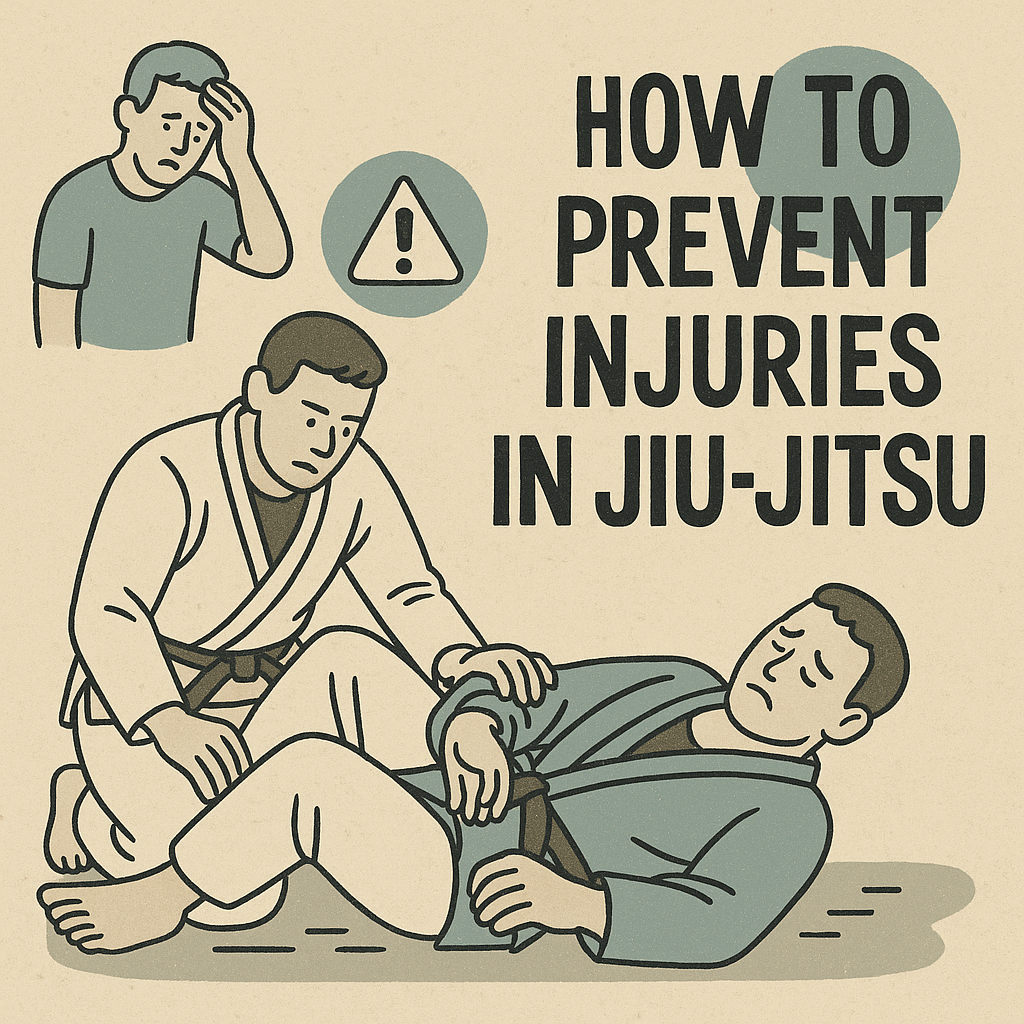
  • How to Prevent Injuries in Jiu-Jitsu (and Stay on the Mats Longer)

    How to Prevent Injuries in Jiu-Jitsu (and Stay on the Mats Longer)

    The Injury Loop (And How to Break Free)

    You’re finally picking up momentum in Jiu-Jitsu…

    Then boom—another injury.

    The nagging elbow that never seems to heal.

    The shoulder tweak that keeps coming back.

    You take a break to heal, but now your skills are slipping. Ever caught yourself thinking, “Is it always going to be like this?”

    You’re not alone:

    If you want to stop repeating this injury loop, you need a plan.


    1. Train Smart: Choose Your Partners Wisely

    To learn how to prevent injuries in Jiu-Jitsu, start by training smart, not recklessly. Trust is key. When practicing deep submissions or escape drills, your partner must respect your safety. Elite grapplers maintain a consistent, trusted core of training mates, not random irregulars.


    2. Tap Early, Tap Often

    Tapping early saves your training.

    One Redditor summed it up well:

    “It stops you quitting earlier in your BJJ lifespan due to injury … it definitely has potential to ALLOW you to get better.” pmc.ncbi.nlm.nih.gov+12reddit.com+12onepbjj.com+12submissionshark.com

    Delaying a tap can cause chronic injuries or worse youtube.com+6onepbjj.com+6elitesports.com+6. Tap today, train tomorrow—that’s how consistency wins.


    3. Get Better (Don’t Stay the Same)

    Remember that time you got caught in the same kimura repeatedly?

    That was a feedback loop:

    “That’s my fault. I need to fix the holes and come back stronger.”

    Every hole in your game isn’t just a skill gap—it’s a potential injury risk.


    4. Get Stronger (Stop Neglecting Strength Training)

    This should be titled #1! Studies show grappling athletes who lift heavy experience far fewer joint injuries. Strengthen your body to protect your joints—and your journey youtube.com+3reddit.com+3bjjnc.com+3en.wikipedia.org+5thesportjournal.org+5bjjselfhelp.com+5rollbliss.combjjnc.com+13injoma.com+13youtube.com+13pmc.ncbi.nlm.nih.gov.


    5. Warm-Up Like a Champ 🔥

    Behind every injury-free session is a quality warm-up.

    • Improves joint range, muscle readiness, and neuromuscular control scienceforsport.com.
    • Grappling warm-ups reduce injury rates by up to 75% injoma.com.
    • Include dynamic drills like shrimping, shoulder rolls, hip ops—simple yet effective .

    📌 At a Glimpse: Prevent Injuries in Jiu-Jitsu

    ✅ HabitBenefit
    Train with trusted partnersReduces surprise jerks & late taps
    Tap earlyAvoids chronic injuries
    Drill smartBuilds better defense and safer positions
    Strength trainProtects joints under stress
    Warm-up properlyPreps body, lowers injury risk

    Bottom Line: Stay Healthy, Stay Consistent

    If you want to get better at Jiu-Jitsu, you need time on the mats.

    Injuries kill momentum—and prevent you from mastering your craft.

    So invest in your body. Be intentional:

    • Choose partners wisely
    • Tap early
    • Fix your game
    • Strength train
    • Warm-up right

    Protect your mat-time. You’re here for the long game, not quick cuts.

    Stay safe, keep rolling.

    📣 Ready to Take Action?

    If you’re tired of waiting for motivation and ready to build the discipline that leads to real results, check out my other posts:

    Remember, the journey to success starts with a single disciplined step. Take that step today.

    Ready to Level Up Your Discipline?
    Check out my free PDF guide on building real strength through discipline, not motivation. If you’re serious about taking ownership of your goals, this is where it starts.
    👉 https://theanvarmethod.com/courses/
    And don’t forget to subscribe to my newsletter to get powerful, no-BS insights every week on performance, mindset, and mastery—straight to your inbox.

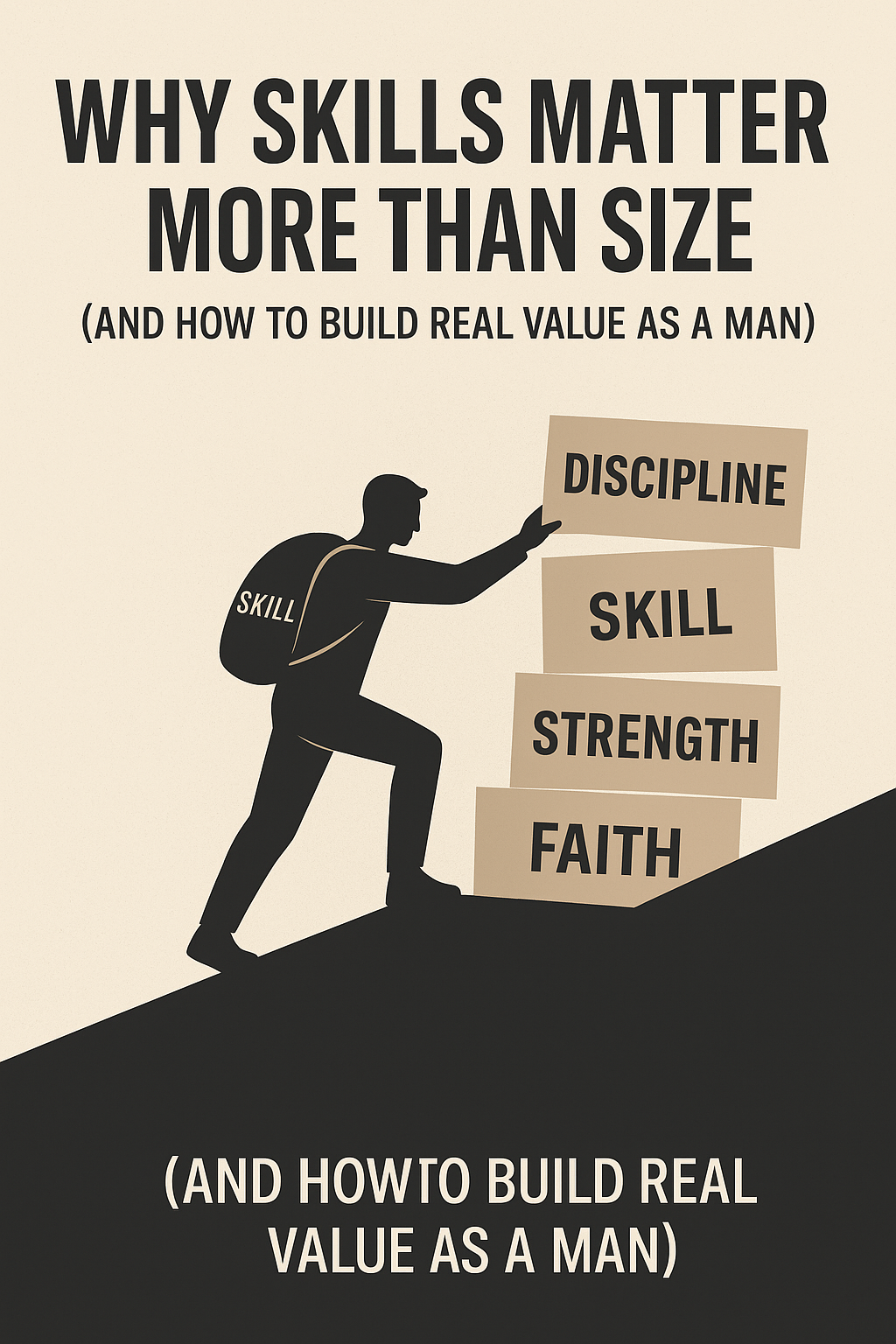
  • Why Skills Matter More Than Size (And How to Build Real Value as a Man)

    Why Skills Matter More Than Size (And How to Build Real Value as a Man)

    When Size Becomes an Excuse

    Not long ago, I was encouraging a guy to try Jiu-Jitsu.
    We were mid-conversation when he hit me with this:

    “But Coach… haven’t you seen how big he is?”

    He was talking about another guy in the class. Let’s call him Joe.

    Joe wasn’t a giant, but he was well-built—muscular, strong, clearly someone who had put time into training.

    And yet, Joe was new. He had maybe a week of training under his belt. But he was already obsessed with learning the art.

    So I looked back at the guy and said:

    “Exactly.”

    Joe had physical strength—sure.
    But now he was stacking another skill: technical ability.

    That’s the game most men don’t even realize they’re playing.

    It’s not about size. It’s about how many skills and assets you’re stacking.


    Skills Over Size: The High-Value Game

    Here’s the real issue:

    The guy who said that wasn’t making an observation—he was revealing a limiting belief.

    The assumption was: If I’m not built like him, what’s the point?

    That mindset will cripple your growth. It’s rooted in the belief that size trumps skill—when in reality, it’s always been skills over size.

    It’s the same as saying:

    • “I’ll never be rich—I wasn’t born into money.”
    • “I can’t get strong—I don’t have good genetics.”
    • “I’m not smart—I didn’t go to university.”

    All of that?
    Excuses disguised as logic.

    What actually matters is this:

    Are you stacking the skills you can control?

    • You can build physical strength
    • You can learn Jiu-Jitsu or another martial art
    • You can grow financially
    • You can develop mental toughness
    • You can deepen your faith
    • You can become a better leader, partner, or parent

    None of that depends on what you were “born with.”

    It depends on how you show up—consistently.


    Why You Need to Think Like an Investor

    Think of your life like a long-term investment strategy.

    Whether you participate or not, life is moving forward.
    In 5 or 10 years, you’re going to end up somewhere—and become someone.

    So ask yourself:

    Are you intentionally building the man you’re becoming?

    If not, you’ll just become an older version of who you are today.

    And that’s a problem.

    Because admiration doesn’t move you forward.
    Neither does comparison.
    Neither does standing still while others stack.

    But consistent self-improvement does.

    📌 Want to take real action today? Read this next:
    👉 Why Motivation Isn’t Enough: 4 Brutal Truths That Actually Drive Action


    What High-Value Men Actually Do

    High-value men don’t chase one big skill. They’re committed to stacking skills across every area of life: physical, mental, financial, and spiritual.

    💪 Physical

    Strength, endurance, athleticism.
    Check out my take on how to build it smart, not bro-science dumb:
    👉 Get Jacked: Finding the Right Training Method for Your Goals

    🧠 Mental

    Discipline. Focus. Clarity.
    Your mind is your operating system. Upgrade it.

    Start here:
    👉 The 18-Minute Rule: Why Mastery Is Easier Than You Think

    💰 Financial

    Learn how money works. Learn how to earn it.
    Then learn how to keep it.
    A great place to start: How to Build Wealth at Any Age – Ramsey Solutions

    🧭 Spiritual

    Faith. Purpose. Legacy.
    Not just how much you lift—but what you stand for.


    Final Takeaway: Stack What Actually Matters

    The size of your muscles, your bank account, your discipline, your faith
    they’re all built the same way: stack by stack.

    Don’t let someone else’s head start be your excuse to stay behind.

    Use it as fuel.

    Someone else might be ahead. That doesn’t mean you can’t catch up—or even pass them—if you start now.

    The game isn’t about where you started.
    It’s about who keeps showing up to play.

    🟢 Want a structured path to build strength, discipline, and grit from the ground up?
    Check out my GPP training course:
    👉 theanvarmethod.com/courses