Author: Anvar Mammadov

  • How to Start When You’re Scared: Stop Waiting and Take Action

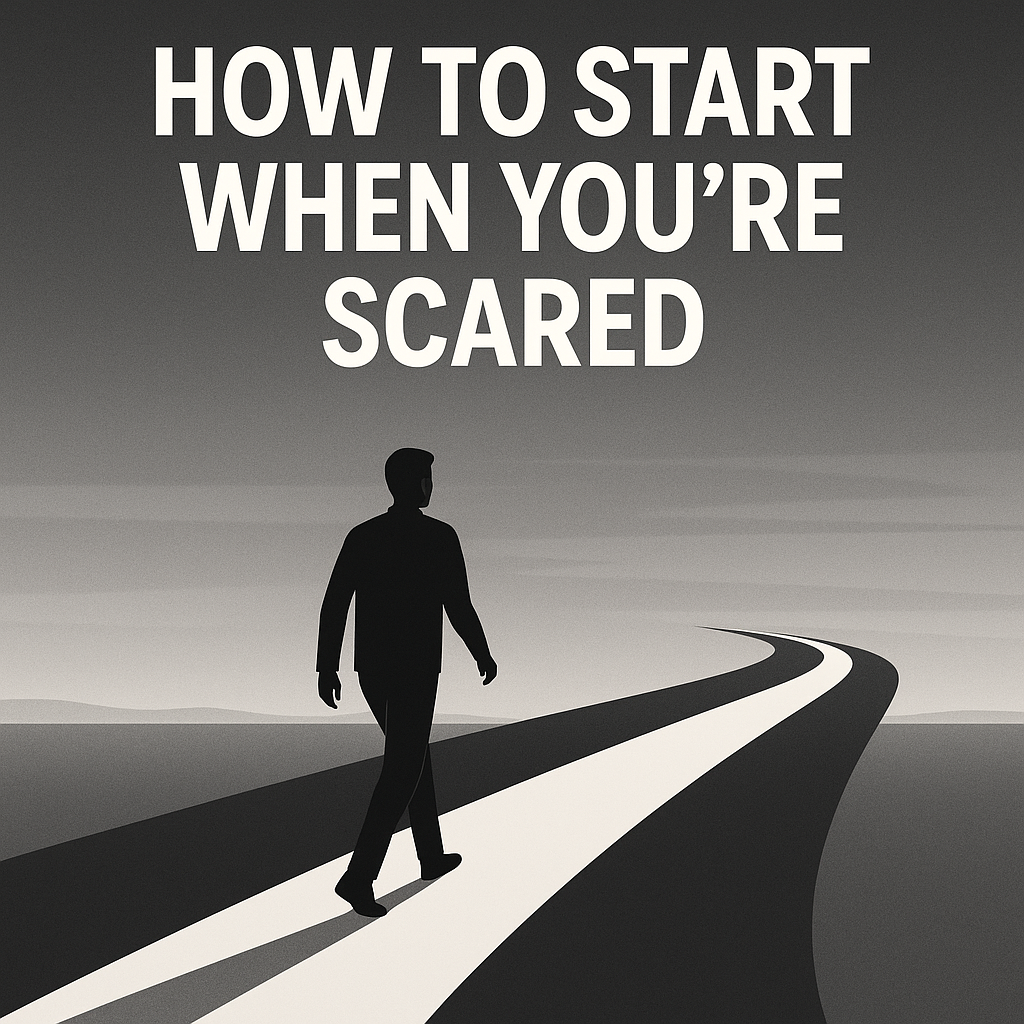
    How to Start When You’re Scared: Stop Waiting and Take Action

    Why You’re Stuck (And Why You Keep Lying to Yourself)

    Let’s cut the crap.

    You’re not “too busy, waiting for the right time.” You’re afraid.

    Afraid of failing, what people will say. Afraid of how hard it might actually be.

    You’re stuck in that familiar loop:

    • “I’ll start tomorrow.”
    • “Next week will be better.”
    • “New year, new me!”

    But weeks turn into months. Months turn into years.

    And deep down, you know it.

    The real story? You’re scared you’ll start… and then quit. Or worse—you’re scared you’ll start and still suck at it.


    Personal Experience: From Paralysis to Progress

    I’m not writing this from a pedestal. I’m writing it from the trenches.

    For years, I was the guy who couldn’t start. I told myself every excuse in the book:

    “I just need one more book, one more podcast, one more secret hack, and THEN I’ll be ready.”

    Spoiler alert: That “one more thing” never came.

    I consumed thousands of hours of content. Read dozens of self-help books. Chased that mythical “perfect plan.”

    Nothing changed. Because I wasn’t doing the one thing that actually moves the needle:

    Starting.

    I thought other people knew something I didn’t. They had some magic sauce that made them consistent, productive, successful.

    Turns out? They just got moving. They committed before they felt ready.


    The Truth About Change: You’re Not a Tree

    Here’s a line that hit me hard—and maybe it’ll hit you too:

    “You’re not a tree. You can move.”

    We aren’t stuck being who we’ve always been.

    Your past doesn’t define your future. Your current skills don’t limit your potential.

    Jim Rohn said it best:

    “How tall does a tree grow? As tall as it can.”

    And guess what? You can grow as much as you’re willing to.

    There are no chosen ones. No golden tickets.

    The only thing holding you back? The BS story you keep telling yourself about why you can’t.


    Talent Doesn’t Matter—Persistence Does

    One of my favorite quotes comes from Chris Haueter, one of the first American black belts in Brazilian Jiu-Jitsu:

    “It’s not about talent—it’s about who’s left.”

    The game isn’t about being the best right out of the gate.

    It’s about sticking around long enough to outlast everyone who quits.

    Small wins build confidence. Confidence builds momentum.

    Momentum makes the hard things easier.


    My Journey: From Construction to Coaching

    I spent over a decade working in construction. When I started?

    I couldn’t even hold a hammer properly.

    Didn’t know what I was doing. Didn’t enjoy it.

    But I stuck with it. A couple of years in, I started getting better. Eventually, I got so good that I was promoted to Manager—overseeing projects and teaching others how to improve their craft.

    Same story with martial arts.

    What began as “just for fun” turned into a full-time coaching career. I even moved to Dubai because of it.

    If you had told me ten years ago this would be my life?

    I would’ve laughed in your face.

    But that’s the power of starting before you’re ready. And staying when it gets hard.


    How to Start When You’re Scared (Action Plan)

    Here’s the only plan you need:

    • Make a Mind Map: Write down the upside, downside, potential outcomes, and why this matters to you.
    • Give Yourself Permission to Quit (Later): Start. Give yourself the option to quit only after you’ve tried it for real.
    • Don’t Overthink It: Forget the perfect plan. You won’t know if something’s right for you until you’re in it.
    • Stack Small Wins: Focus on what you can do today—not what might happen a year from now.
    • Stay Long Enough to Get Good: You don’t need to be the best. You just need to keep showing up.

    Final Kick (Takeaway)

    There’s something calling you. You know it.

    It’s that thing that keeps popping into your head at night, the idea that won’t leave you alone.

    Stop waiting, consuming, telling yourself stories.

    Just start.


    📣 Ready to Take Action?

    If you’re tired of waiting for motivation and ready to build the discipline that leads to real results, check out my other posts:

    Remember, the journey to success starts with a single disciplined step. Take that step today.

    Ready to Level Up Your Discipline?
    Check out my free PDF guide on building real strength through discipline, not motivation. If you’re serious about taking ownership of your goals, this is where it starts.
    👉 https://theanvarmethod.com/courses/
    And don’t forget to subscribe to my newsletter to get powerful, no-BS insights every week on performance, mindset, and mastery—straight to your inbox.
  • Get Jacked: Finding the Right Training Method for Your Goals

    Get Jacked: Finding the Right Training Method for Your Goals

    Get Jacked: Finding the Right Training Method for Your Goals


    What Does It Even Mean to “Get Jacked”?

    Before we talk about how to get jacked, let’s define what that actually means—because “jacked” can mean different things depending on who you ask.

    Are we talking about:

    • Getting lean and shedding fat?
    • Building muscle and strength?
    • Or both?

    Clarity matters. You’re more likely to reach your goal when you know exactly what that goal is. Vague goals lead to vague results. So, first things first: Get clear on what you’re after.


    My Story: Two Decades of Trying It All

    If you’re new here, quick background on me:

    I started training around the age of 13 or 14. Like many teenagers, my first goal was simple—lose some fat (especially around my face and belly) and get stronger. Back then, I didn’t have access to a gym, so I started with calisthenics.

    Fast forward 19 years, and I’ve dipped my toes into almost every style of training:

    • CrossFit
    • Powerlifting
    • Calisthenics / Gymnastics
    • Bodybuilding-style training
    • Running, swimming, martial arts

    Each method has its pros and cons. What works best often comes down to your personality, your lifestyle, and—most importantly—what you’ll actually stick with.

    One quote that stuck with me over the years is:

    “The best training is the one that gets done.”

    Doesn’t matter how good a plan looks on paper if you’re not consistent with it.


    Bodybuilding: The Aesthetic Approach

    If your goal is to build muscle size, shape, and definition—the classic “jacked” look—bodybuilding might be your lane.

    How It Works:

    Bodybuilding focuses on isolating muscle groups and hitting them with volume (higher reps, lower weights). Typical split routines might look like this:

    Example: Chest/Arms Day (3 sets of 8–12 reps)

    • Flat Bench Dumbbell Press
    • Incline Dumbbell Press
    • Dips
    • Dumbbell Military Press
    • Dumbbell Lateral Raises

    Pros:

    • Excellent for muscle hypertrophy (growth)
    • Focused on aesthetics and symmetry
    • Proven results—just look at competitive bodybuilders (even the natural ones)

    Cons:

    • Can feel repetitive and time-consuming
    • May lack functional strength if not paired with compound lifts
    • Might get boring if aesthetics aren’t your top priority

    Powerlifting: Strength First, Looks as a Bonus

    Powerlifting is all about getting strong. The focus is on the “big three” lifts:

    • Deadlift
    • Squat
    • Bench Press

    I personally lean toward powerlifting right now because I like the idea of training for strength first—and letting the aesthetics be a byproduct.

    Why Powerlifting Works:

    Even elite athletes in other sports use powerlifting movements to build strength, speed, explosiveness, and prevent injuries. Bodybuilders also sneak these in because compound lifts hit multiple muscle groups at once.

    Posterior Chain vs. Anterior Chain:

    • Posterior Chain: Backside muscles—glutes, hamstrings, lats, etc.
    • Anterior Chain: Frontside muscles—quads, core, pecs.

    Compound exercises work both chains and build a solid foundation of strength.

    Pros:

    • Functional strength that carries over to sports and life
    • Simple, focused training plan
    • Strength builds confidence

    Cons:

    • Requires good technique, especially as the weights get heavier
    • Higher learning curve to avoid injury (form matters!)
    • Some might find it less exciting if their main goal is aesthetics

    Read more on the benefits of strength training


    Calisthenics / Gymnastics: Bodyweight Mastery

    Calisthenics (basically gymnastics for the everyday person) focuses on controlling your own bodyweight. Think pull-ups, dips, handstands, muscle-ups.

    Why I Respect This Approach:

    Gymnasts are pound-for-pound some of the strongest athletes out there—especially in upper body and core strength. They’re also some of the leanest and most shredded.

    Pros:

    • Builds real-world strength and body control
    • No gym required (great for home or outdoor training)
    • Amazing for mobility, balance, and coordination

    Cons:

    • High stress on joints (wrists, shoulders, elbows) if not done smartly
    • Progressions can take time and patience
    • May lack lower-body strength if not paired with leg work

    Check out my story on calisthenics vs gym training


    CrossFit: High Intensity, High Risk?

    Here’s my honest take on CrossFit: It’s not for me.

    CrossFit combines elements from powerlifting, Olympic lifting, gymnastics, and HIIT—all under time constraints, often in a competitive setting.

    Why I’m Not a Fan:

    • Complex lifts + fatigue + racing the clock = recipe for injury
    • Form and technique suffer when time pressure kicks in
    • I prefer controlled circuit training at my own pace without the competition aspect

    That said, circuit training itself isn’t bad. Martial artists and wrestlers have used similar methods for decades—just with smarter programming.


    So… Which One Should You Choose?

    The truth? There’s no one-size-fits-all.

    Here’s my advice:

    • Try different methods. See what clicks.
    • Check your intention. Do you want aesthetics, strength, mobility, endurance—or a mix?
    • Be honest about what you enjoy. The best program is the one you’ll actually stick with.
    • Don’t be afraid to pivot. Your goals might change. Your training should too.

    Learn how to stay consistent and build momentum


    Final Thoughts: Just Commit (You Can Adjust Later)

    Stop overthinking. Pick something. Start. Stay consistent.

    If it’s not the right fit? Adjust. Pivot.

    But you can’t adjust what you never started.

    Getting jacked—whether that means strength, size, or just feeling better in your body—isn’t about the perfect plan.

    It’s about showing up and sticking with it long enough to see results.


    📣 Ready to Take Action?

    If you’re tired of waiting for motivation and ready to build the discipline that leads to real results, check out my other posts:

    Remember, the journey to success starts with a single disciplined step. Take that step today.

    Ready to Level Up Your Discipline?
    Check out my free PDF guide on building real strength through discipline, not motivation. If you’re serious about taking ownership of your goals, this is where it starts.
    👉 https://theanvarmethod.com/courses/
    And don’t forget to subscribe to my newsletter to get powerful, no-BS insights every week on performance, mindset, and mastery—straight to your inbox.
  • Why Motivation Isn’t Enough: 4 Brutal Truths That Actually Drive Action

    Why Motivation Isn’t Enough: 4 Brutal Truths That Actually Drive Action

    Why Motivation Isn’t Enough: 4 Brutal Truths That Actually Drive Action


    The Motivation Trap: Why You’re Still Stuck

    Let me ask you something:

    What did you actually achieve this year? This month? This week? Today?

    If your answer is “not much” or “still working on it,” I want to challenge that—hard.

    Lack of energy?

    Lack of focus?

    Lack of willpower?

    Or, the big one: lack of motivation?

    It’s the most popular excuse. And the most dangerous.

    Because if you’re still waiting for motivation to show up like some magical UPS delivery—it’s not coming. You’re stuck in what I call the motivation trap. And the longer you sit there, the more time you lose.


    What Is Motivation, Really?

    We talk about motivation like it’s oxygen. “I need to feel motivated.” “I wish I had your motivation.” “I’ll do it when I’m motivated.”

    Here’s the truth:

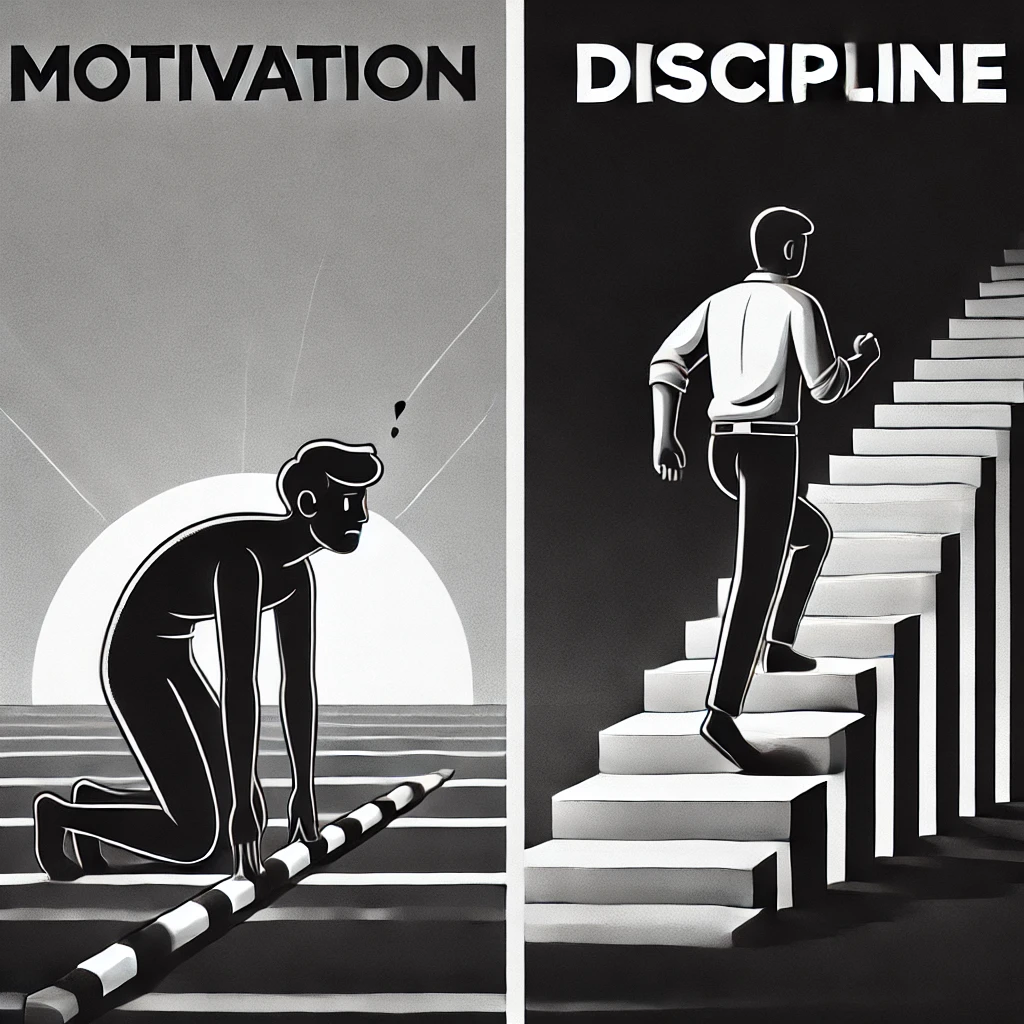
    Motivation is just a temporary emotional spike. It’s unreliable. Fleeting. And most of all—it gives you a built-in excuse to avoid taking responsibility.

    The Latin root of “motivation” is motive—a reason to act. But most people use it as a reason not to act.

    “I don’t feel like it today.”

    That’s not a reason. That’s avoidance dressed in self-help clothing.


    1. Find Your Why (Your Real Reason)

    If you’re serious about making a change, forget motivation. You need clarity.

    Ask yourself:

    • Why am I really doing this?
    • What outcome am I chasing?
    • What happens if I don’t?

    I used to roll my eyes when I heard the “find your why” mantra. But eventually, I realized everyone I admired had one. And when things got hard, their why kept them going.

    Motivation fades. But meaning sticks.

    Getting fit? Maybe it’s about showing up for your family.

    Pursuing wealth? Maybe it’s about freedom, not Ferraris.

    Your “why” should hit a nerve. It should make you feel something. Write it down. Tape it to your mirror. Let it remind you that this isn’t just about feeling good—it’s about becoming someone better.


    2. Pain & Fear: The Real Motivators

    Let’s get real.

    The strongest push doesn’t come from inspiration—it comes from pain and fear.

    The pain of staying stuck. The fear of looking back and regretting your life.

    It’s not the Instagram quotes that light a fire under you—it’s the rock bottom moments. The heartbreak. The failures. The breakdowns that spark breakthroughs.

    Examples?

    • A humiliating rejection pushes someone to build confidence.
    • A health scare drives someone to overhaul their lifestyle.
    • Crippling debt pushes a person to start that business.

    These aren’t fairy tales. These are real people who used pain as a pivot point.

    You want real motivation? Stare directly at what will happen if you don’t change.


    3. The Dream: Hope with a Plan

    Pain pushes. But dreams pull.

    And here’s the twist:

    A dream without a plan is just another form of self-deception.

    Everyone has dreams. But the people who turn them into reality? They write it down, map it out, create systems, habits, and timelines.

    Your dream has to live in your calendar, not just in your head.

    Write your vision. Then reverse-engineer it. That’s how you shift from dreaming to doing.

    Because a plan turns a hope into a goal. And a goal with deadlines becomes a reality.


    4. Kill Self-Pity—It’s Poison

    Here’s a question I get all the time:

    “Where do you find the energy to keep going?”

    Answer: I don’t. I just don’t allow self-pity in my space.

    That’s the only difference.

    You can feel tired. You can even feel frustrated. But pity? That’s the exit ramp to nowhere.

    What’s the alternative?

    Quit? Stay stuck? Blame life?

    Nah.

    This world will keep spinning—with or without you. You either get up and fight for your future, or you settle for surviving.

    Motivation won’t save you.

    But responsibility? That’s a superpower.


    Final Takeaway: Forget the Motivation Myth—Choose Discipline

    Let go of the myth.

    Motivation is not your solution. It’s a distraction.

    If you want real results, the path is simple (but not easy):

    • Know your why
    • Let pain and fear drive urgency
    • Let your dream pull you forward
    • Kill the excuses
    • Show up—even on the hard days

    Because discipline builds the life motivation keeps promising you.


    🤔 FAQs About Why Motivation Isn’t Enough

    1. What does it mean when people say motivation isn’t enough?
    It means that motivation is temporary and unreliable. You need structure, purpose, and discipline to sustain progress.

    2. Can motivation ever help at all?
    Yes, it can spark the initial action—but it rarely sustains long-term change. That’s where purpose and systems come in.

    3. What’s the best replacement for motivation?
    Responsibility. Routine. A clear “why.” And the willingness to show up regardless of how you feel.

    4. Why do I lose motivation so quickly?
    Because it’s based on feelings, not commitments. Once the emotion fades, so does the action.

    5. How can pain and fear help motivate me?
    They give urgency. Fear shows you what you want to avoid; pain shows you where you’ve been stuck. Use both as fuel, not excuses.

    6. What’s one habit I can build today?
    Start with 10 minutes of action—daily. It builds momentum and teaches your brain that progress isn’t tied to mood.


    📚 Further Reading


    📣 Ready to Take Action?

    If you’re tired of waiting for motivation and ready to build the discipline that leads to real results, check out my other posts:

    Remember, the journey to success starts with a single disciplined step. Take that step today.

    Ready to Level Up Your Discipline?
    Check out my free PDF guide on building real strength through discipline, not motivation. If you’re serious about taking ownership of your goals, this is where it starts.
    👉 https://theanvarmethod.com/courses/
    And don’t forget to subscribe to my newsletter to get powerful, no-BS insights every week on performance, mindset, and mastery—straight to your inbox.
  • The Truth About Diet & Nutrition (Why Most People Overcomplicate It)

    The Truth About Diet & Nutrition (Why Most People Overcomplicate It)

    Why Most People Struggle With Dieting

    Almost every time I talk to someone—whether it’s my students, friends, or even random people—the topic of diet and nutrition comes up. And most of the time, people are either confused or completely clueless about how to eat properly.

    I get questions like:

    🔹 What should I eat to stay lean?

    🔹 How much protein do I need?

    🔹 How many meals should I have per day?

    🔹 What foods do you avoid?

    If you’ve ever wondered the same things, this post is for you.

    First, a disclaimer: I’m not a doctor, dietitian, or nutritionist. I’m simply sharing what has worked for me after years of experimenting, training, and researching. If you have any medical conditions, always check with your doctor before making drastic dietary changes.

    That said, let’s get into it.


    The Biggest Problem With Diets

    Most people know that diet plays a huge role in achieving a lean, strong physique—arguably more than training.

    Yet, people jump from one trend to another:

    ❌ First, it was keto.

    ❌ Then, it was paleo.

    ❌ Then, it was high protein, high fat, low-carb.

    ❌ Now, people are experimenting with Ozempic and weight-loss drugs.

    Every few years, there’s a new trend, a new “magic solution.” But here’s the truth:

    📌 Fad diets are temporary.

    📌 Extreme restriction is unsustainable.

    📌 If you can’t stick to it for life, it won’t work long-term.

    Most people who follow these diets eventually fall off, regain the weight (often even more), and go back to square one.

    Diets fail because they’re not built for real life.


    Should You Count Calories? Track Macros? Follow a Strict Meal Plan?

    Some people meticulously track everything they eat:

    ✔️ Weighing food

    ✔️ Measuring macros

    ✔️ Meal prepping every bite they consume

    I’ve seen bodybuilders carry pre-packed meals everywhere—eating chicken and rice out of a container multiple times a day.

    And if that works for them, great. But for most people? That’s not sustainable.

    Personally, I don’t count calories, macros, or weigh my food. I’ve tried different diets over the years just to see how my body reacts. Some were impossible to follow. Others made me feel great.

    The only one I stuck with for a while? Intermittent Fasting (IF).

    Why? Because it fit my lifestyle.

    I’ve never been a fan of breakfast, so skipping it felt natural. I also found that eating too close to my Jiu-Jitsu sessions (at 6–7 PM) made me feel sluggish.

    With IF, I naturally ate less often, but better meals. And it worked.

    This isn’t to say IF is for everyone. But the best “diet” is one that feels natural, fits your routine, and is sustainable for life.


    What Actually Works? The Key to Long-Term Health

    Instead of obsessing over diets, focus on a healthy lifestyle.

    📌 Avoid processed foods. Stick to whole foods—things that rot quickly and don’t come in a package.

    📌 Stay away from sugar. This includes sugary drinks, sweets, and highly processed snacks.

    📌 Eat what’s natural for your region. If you live by the sea, fish should be a staple. If you live in an agricultural area, local fruits and vegetables should dominate your diet.

    📌 Don’t follow extreme restrictions. Humans have thrived on a mix of animal and plant foods for thousands of years. Cutting out entire food groups isn’t necessary for most people.

    📌 Listen to your body. Some people digest meat better. Others feel great with more plants. Your diet should be built around how YOU feel and perform best.

    One study found that people in “Blue Zones” (areas with the longest-living populations) ate based on what was naturally available to them—and their diets varied greatly from place to place. (Source)


    Protein: How Much Do You REALLY Need?

    The fitness industry has obsessed over protein for years. And yes, protein is important for muscle growth.

    But how much do you actually need?

    📌 The scientific recommendation is about 1.2–1.6 grams per kg of body weight per day for active individuals. (Source)

    For a 75kg person, that’s around 90–120g of protein daily.

    Now, do you need to count every gram? No. If you eat a balanced diet with meat, fish, eggs, dairy, beans, or other protein sources, you’ll likely get enough.

    What’s more important than protein? Overall nutrition.

    People get obsessed with macros but ignore vitamins, minerals, fiber, and gut health.


    What About the Scale? Should You Track Your Weight?

    📌 If you’re overweight and trying to lose fat, the scale can be useful to track progress.

    📌 If you’re already lean and strong, weight doesn’t matter as much.

    You can be 75kg and weak or 81kg and strong, muscular, and healthy.

    Instead of obsessing over the scale, ask yourself:

    ✔️ Do I feel good?

    ✔️ Am I getting stronger?

    ✔️ Do I have energy throughout the day?

    Your goal should be strength, performance, and longevity—not just chasing a number.


    Final Takeaways: What You Should Actually Do

    1️⃣ Eat whole, natural foods. Avoid processed junk.

    2️⃣ Stop obsessing over macros and calories. Focus on quality nutrition.

    3️⃣ Eat a variety of foods. Balance meat, fish, fruits, vegetables, and grains.

    4️⃣ Prioritize longevity, not just aesthetics. Your body should function well, not just look good.

    5️⃣ Listen to your body. There’s no perfect diet—only what works for YOU.

    At the end of the day, nutrition isn’t complicated.

    Eat real food. Avoid processed junk. Stay active. Everything else takes care of itself.


    Resources:

    Harvard Health: Healthy Eating Plate

    Blue Zones nutrition research

    Protein intake research (NCBI)

    Read More:

  • Jiu-Jitsu Is Hard (And That’s Why It’s Worth It)

    Jiu-Jitsu Is Hard (And That’s Why It’s Worth It)

    Jiu-Jitsu Will Challenge You Like Nothing Else

    I’ve trained my entire life. Since I was 12 or 13, I’ve been involved in different strength training disciplines—calisthenics, CrossFit, bodybuilding, powerlifting. I’ve also tried multiple martial arts, but nothing has challenged me like Brazilian Jiu-Jitsu (BJJ).

    I’ve spent the last 12–13 years on the mats, and if I’m fortunate, I’ll spend many more. Jiu-Jitsu is a lot of things—technical, rewarding, frustrating, humbling, addictive. But if I had to describe it in one word, I’d say:

    👉 It’s hard.

    When I received my black belt, I felt joy, a sense of accomplishment, and pride. But my coach’s words that day stuck with me:

    🗣 “You’re not done. The journey just begins. Jiu-Jitsu is a fresh product, like a flower—if you don’t water it, it will fade away.”

    And he was right.

    Jiu-Jitsu isn’t something you master and move on from. It’s something you constantly refine, relearn, and struggle through.

    Brazilian Jiu Jitsu’s links to mental health explored in new research study


    Jiu-Jitsu: The Human Chess Game

    They call BJJ “human chess” for a reason. Every roll is a game of strategy.

    You make a move, your opponent counters. You try to anticipate their next step while setting up your own attack. You get caught, analyze your mistakes, and troubleshoot for the next round.

    Unlike many martial arts, BJJ is endless.

    🔹 Judo focuses primarily on takedowns, with a small amount of ground control (newaza).
    🔹 Wrestling is almost entirely takedowns and pins.
    🔹 Boxing has a handful of core strikes—jab, cross, hook, uppercut—but the magic is in execution.

    Brazilian Jiu-Jitsu? You need to know everything:

    ✅ Takedowns
    ✅ Takedown defense
    ✅ Positioning
    ✅ Escapes
    ✅ Submissions
    ✅ Submission defense

    And just when you think you’ve got it all figured out, someone invents a new move.

    Jiu-Jitsu evolves constantly. If you aren’t learning, you’re falling behind.


    You Never Stop Learning

    At black belt, I thought I’d finally have the complete picture.

    ❌ Wrong.

    Only now do I have a broad enough understanding to start putting everything together at a higher level. It’s like reaching the top of a mountain—only to realize there’s another one in front of you.

    You never stop growing.

    You replay mistakes in the shower. You think about a submission you should’ve escaped. You obsess about that kimura you walked into last night.

    And that’s exactly why it’s so addictive.


    The Mental Game: Why Jiu-Jitsu Breaks People

    BJJ is physically demanding, but what makes it truly hard is the mental battle.

    The Comparison Trap

    You might think:

    ❌ “I suck, I’m getting tapped every round.”
    ❌ “Why do I feel like I’m getting worse?”
    ❌ “How is this white belt catching me?”

    We all do it.

    There’s constructive comparison (motivates growth), and destructive comparison (makes you want to quit).

    The solution?

    👉 Shut up and train. No one cares. Keep showing up.


    Hard Truths That Apply to Life Too

    1. Training More = Getting Better

    People want elite results on hobby-level effort. Doesn’t work like that.

    You wouldn’t train 2x/week in basketball and expect to play like Jordan.

    Same with Jiu-Jitsu. If you’re training 2–3x/week for fun—great. Enjoy it. But don’t compare yourself to 20-year-olds training 10 hours a week for Worlds.

    Be honest about your inputs and goals.

    Learning curve in complex skills / motor learning


    2. You’re Only as Good as Your Last Roll

    Roll great with a brown belt. Get smashed by a white belt next round.

    It’s normal.

    ✅ Higher belts? You’ve got nothing to lose.
    ✅ Lower belts? You’ve got everything to lose.

    Stop chasing perfection. Focus on consistency.


    3. You’re Probably Just a Few Inches Off

    You don’t suck.

    You’re just missing a detail or two.

    Like a golfer whose ball lands in the pond—the problem wasn’t where the ball landed, but how slightly off their swing was.

    Fix one thing at a time. That’s how mastery works.


    Conclusion: Keep Showing Up

    BJJ is 95% mental and 5% physical.

    Most people quit before they get good.

    If you want to win at Jiu-Jitsu (and life), follow this:

    🔥 Keep training. Enjoy the struggle. Don’t take it too seriously.

    And remember:

    🗣 “Jiu-Jitsu isn’t about talent. It’s about who’s left.” Chris Haueter

    Leave a comment—what’s the hardest thing you’ve had to learn in Jiu-Jitsu?

    Recommended Reading:

    Why you’re not seeing progress

    How to approach mastery in any skill

    How to speed up your learning in Jiu-Jitsu

  • The Real Reason You’re Not Making Progress

    The Real Reason You’re Not Making Progress

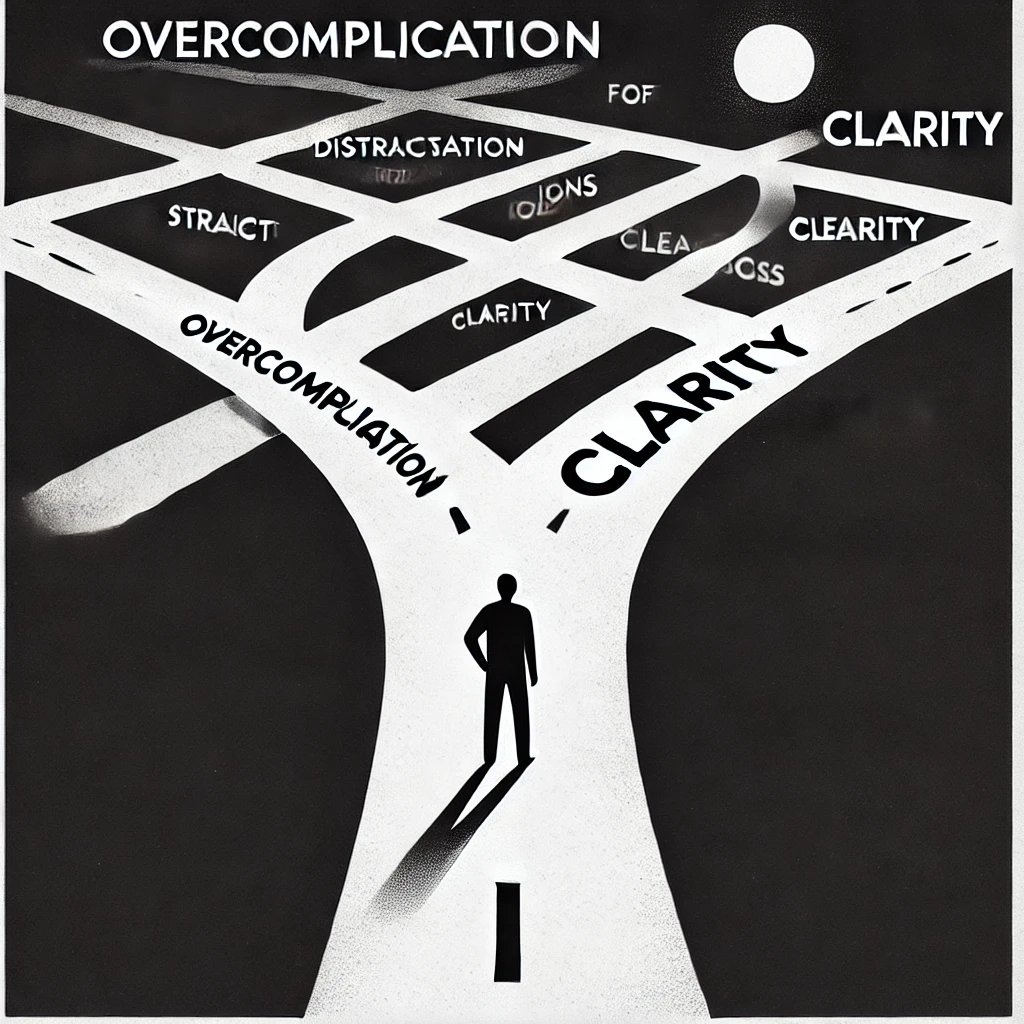
    You don’t have a motivation problem. You have a clarity problem.

    Think about it—when was the last time you set a goal and actually followed through?

    Maybe you wanted to:

    Get in shape
    Start training consistently
    Build a new habit

    You started strong. You were excited. You had all the motivation in the world.

    Then life happened. You got busy. You skipped one day. Then another. Before you knew it, you were back to square one.

    Sounds familiar?

    You’re not alone.

    Most people don’t fail because they lack motivation. They fail because they lack clarity and a system.


    You’re Overcomplicating Everything

    One of the biggest mistakes people make is trying to change everything at once.

    They want to:

    🚫 Train 5x a week
    🚫 Fix their diet overnight
    🚫 Wake up at 5 AM
    🚫 Read 50 books
    🚫 Meditate daily

    All at the same time.

    But here’s the truth:

    👉 Complexity kills progress.

    The more moving parts you add, the harder it becomes to stay consistent.

    That’s why the most successful people simplify everything.


    The Power of “One Thing”

    Instead of trying to overhaul your entire life overnight, do this:

    🔹 Pick ONE thing.
    🔹 Commit to it daily.
    🔹 Track your progress.

    That’s it.

    No complicated productivity hacks. No fancy techniques. Just one simple habit at a time.


    Example: How I Applied This

    When I started training Jiu-Jitsu, I didn’t worry about:

    ❌ Diet
    ❌ Strength training
    ❌ Recovery hacks

    I had one rule: Show up to training.

    That one habit? It changed everything.

    Once I nailed the habit of showing up, everything else followed naturally—my diet improved, my strength increased, my discipline grew.

    The key? Mastering one thing first.


    What You Need to Do Now

    1️⃣ Pick one habit. Make it simple. Train 3x a week. Walk daily. Cut out junk food.

    2️⃣ Commit for 30 days. Don’t add anything new. Just stick to this one habit.

    3️⃣ Track it. A simple checklist works. Seeing progress keeps you going.

    Master one thing at a time, and progress will come automatically.


    The Bottom Line

    📌 If you’re stuck, it’s because you’re overcomplicating things.
    📌 The secret isn’t motivation—it’s clarity.
    📌 Focus on ONE thing, and everything else will follow.

    Now—what’s the ONE habit you’re committing to for the next 30 days? Drop a comment below. 👇

    Learn More About: The 18-Minute Rule. Why Mastery is Easier Than You Think.

  • Why You Keep Failing (And How to Fix It)

    Why You Keep Failing (And How to Fix It)

    Ever feel like no matter how hard you try, you’re stuck?

    You set goals. You get excited. You grind for a bit…

    Then something happens. You lose momentum. You fall off.

    And suddenly, you’re back to square one.

    🔹 Still out of shape.
    🔹 Still not making progress.
    🔹 Still watching others succeed while you’re stuck.

    Why does this keep happening? And more importantly—how do you fix it?

    I’ve been there. Over and over. But after years of trial, error, and frustration, I realized something:

    👉 You don’t need more motivation. You need a system.


    Motivation Is a Lie

    Most people think they fail because they lack motivation.

    They wait for motivation to strike.

    They say: “I’ll start when I feel ready.”

    But motivation is unreliable. It comes and goes.

    The people who actually succeed? They don’t rely on motivation.

    They have systems.


    What’s a System?

    A system is what keeps you moving even when you don’t feel like it.

    📌 Motivation says: “I don’t feel like training today.”
    📌 A system says: “It’s Monday. That means training. No debate.”

    📌 Motivation says: “I’ll start my diet next week.”
    📌 A system says: “I meal-prepped. My food is ready. No excuses.”

    Success isn’t about doing things when you feel like it. It’s about building habits that make success automatic.


    How to Build a System That Works

    Want to actually follow through? Do this:

    1️⃣ Set Non-Negotiables – Pick a few key habits and make them rules, not choices.

    2️⃣ Remove Friction – Make the right choice easy. (Pack your gym bag the night before.)

    3️⃣ Track Your Wins – Progress fuels momentum. Write down every rep, session, or step forward.

    The secret to long-term success?

    Don’t wait for motivation. Make success inevitable.


    Why Most People Stay Stuck

    Most people don’t fail because they lack time, ability, or discipline.

    They fail because they overcomplicate everything.

    They try to:

    ❌ Train six times a week after years of doing nothing.
    ❌ Fix their entire diet overnight.
    ❌ Follow some “hardcore” routine that’s unsustainable.

    They jump in too hard, burn out, and quit.

    📌 The solution? Simplify.

    Start small. Build momentum. Let progress keep you going.


    We All Have Time (But Do You Have Priorities?)

    The number one excuse I hear is:

    “I don’t have time to train.”

    But out of 150+ people I know who train—only 5 are professional athletes.

    Most have full-time jobs. Families. Kids. Responsibilities.

    And they still train.

    📌 Why? Because they made it a priority.

    If something matters, you make time. If it doesn’t, you make excuses.

    Ask yourself:

    • If you quit training, what will you do instead?
    • Will you binge-watch Netflix? Scroll social media? Waste time?
    • Or will you build something worthwhile?

    The answer is clear.


    The Power of Identity (Who Are You?)

    For years, I was a yes-man.

    I thought saying no would disappoint people. So I spread myself thin, saying yes to everything—except my own goals.

    Then I realized something:

    If you don’t respect your time, no one else will.

    People mocked me when I started training.

    ❌ “Why do you train so much?”
    ❌ “Are you preparing for the Olympics?”
    ❌ “You never have time for anything.”

    Then something changed.

    I stayed consistent. And over time, the same people who mocked me started saying:

    “I wish I never stopped training.”
    “Man, you look strong—can you train me?”
    “I should have stayed disciplined like you.”

    I didn’t change for them. I changed for me.

    📌 How? I shifted my identity.

    I wasn’t “trying” to train—I was an athlete.
    I wasn’t “trying” to eat clean—I was someone who took care of his body.

    If you see yourself as someone who trains, learns, and improves daily, your actions will follow.


    How to Never Miss a Session

    You need to make missing training more painful than showing up.

    Here’s how:

    📌 Commit publicly. (Tell people what you’re doing—now you’re accountable.)
    📌 Bet money on it. (If you skip training, donate $50 to a cause you hate.)
    📌 Set your environment up for success. (Have your gear ready. Schedule workouts like meetings.)

    If you make it easy to train and hard to skip, consistency takes care of itself.

    “Consistency is often more important than motivation alone when striving for success.”


    Final Thought: Systems > Motivation

    If you’re waiting for motivation, you’ve already lost.

    Discipline is what keeps you going long after motivation dies.

    💡 Discipline beats motivation.
    💡 Consistency beats intensity.
    💡 Systems beat willpower.

    Now—what’s ONE habit you can commit to daily?

    Drop a comment and let me know.


    P.S. Read my other 2 blog posts that talk about similar topics if you haven’t already:
    How to Actually Learn Anything (The One Trick No One Talks About)

    The 18-Minute Rule: Why Mastery is Easier Than You Think

  • How to Actually Learn Anything (The One Trick No One Talks About)

    How to Actually Learn Anything (The One Trick No One Talks About)

    Want to learn faster? Improve any skill? Master something new?

    Most people think learning is about talent. Or intelligence.

    It’s not.

    The truth is, the people who master skills aren’t the smartest. They’re the ones who know how to learn.

    I wasted years doing it wrong. Reading without applying. Watching without practicing. Thinking I understood something just because I consumed information.

    Then I discovered one simple trick that changed everything:

    Teach What You Learn.


    Why Teaching Works (Even If You’re a Beginner)

    The Role of Active Recall in Knowledge Retention


    Most people assume you need to be an expert before you teach. That’s false.

    🔹 Teaching forces clarity. If you can’t explain it simply, you don’t fully understand it.

    🔹 Teaching exposes gaps. When someone asks a question you can’t answer, you realize what’s missing.

    🔹 Teaching makes learning stick. We forget most of what we consume. But when you teach, the knowledge becomes part of you.

    This is why elite athletes become better when they coach. It’s why students who tutor others retain more information.

    And it’s why, when I started coaching Jiu-Jitsu, my own skills skyrocketed.


    The Feynman Technique (The Smartest Way to Learn Faster)

    Understanding the Feynman Technique for Effective Learning


    Nobel Prize-winning physicist Richard Feynman had a simple rule:

    👉 “If you can’t explain it to a child, you don’t really understand it.”

    His method?

    1️⃣ Choose a topic. Pick something you want to learn.

    2️⃣ Explain it in the simplest terms possible. If you can’t simplify it, you don’t fully understand it yet.

    3️⃣ Find gaps and refine your understanding. If you struggle to explain a part of it, go back and study that section more.

    4️⃣ Organize your thoughts and revisit them. Keep refining your understanding over time.

    It’s the same principle behind the Rubber Duck Method in programming—where developers explain code to a rubber duck to clarify their thinking.

    Sounds ridiculous. But it works.


    How to Apply This to Your Life

    Whatever skill you’re trying to learn, start teaching it immediately.

    📌 Just learned a new training technique? Explain it to a friend.

    📌 Trying to master a new concept? Write about it in simple terms.

    📌 Studying a new language? Teach someone five new words today.

    The sooner you teach, the faster you improve.

    What is the biggest mistake people make? They consume information without using it.

    Reading is good. Watching tutorials is fine. But if you’re not applying and teaching it, you’re just collecting knowledge you’ll forget.


    Deliberate Practice: The Fastest Way to Learn

    Most people learn passively. They read, watch, or listen—but don’t apply.

    The fastest learners practice deliberately. Here’s how:

    1️⃣ Immerse yourself completely. No distractions. Deep focus.

    2️⃣ Analyze and correct mistakes. Find where you’re going wrong and fix it.

    3️⃣ Break it into small parts. Master the fundamentals before moving on.

    4️⃣ Use feedback. Record yourself, get critiques, and adjust.

    5️⃣ Repeat, refine, and simplify. Keep improving your technique.

    Every time I’ve recorded myself rolling in Jiu-Jitsu, I’ve spotted mistakes I never noticed in real-time. That’s deliberate practice.

    “Consistent practice is crucial for mastering new skills. Implementing strategies like The 18-Minute Rule can help maintain daily learning habits.”


    How Teaching Jiu-Jitsu Improved My Game

    When I started coaching, I thought I already had a good grasp of Jiu-Jitsu.

    I was wrong.

    Once I had to explain techniques to white belts, I realized how many gaps there were in my understanding.
    I had to:

    🔹 Break things down step by step.

    🔹 Find ways to make complex movements easier to understand.

    🔹 Relearn techniques from the ground up.

    The result? My game skyrocketed.

    Why? Because when you teach, you’re forced to deeply understand.

    The same applies to any skill. If you can’t teach it, you don’t truly know it.


    Final Thought: Stop Consuming. Start Creating.

    Most people stay average because they only consume.

    But the real secret? Creation > Consumption.

    📌 Don’t just read. Summarize.

    📌 Don’t just study. Apply.

    📌 Don’t just learn. Teach.

    You don’t need to be an expert to start. In fact, teaching is how you become one.

    So—what’s one skill you’ve been learning?

    Drop a comment and share it. Let’s grow together.

  • The 18-Minute Rule: Why Mastery is Easier Than You Think

    The 18-Minute Rule: Why Mastery is Easier Than You Think

    The 18-Minute Rule: Why Mastery is Easier Than You Think

    We live in a time where people want everything instantly.

    • Quick money hacks
    • Rapid weight loss tricks
    • Fast ways to get in shape

    If something isn’t fast and effortless, people lose interest.

    And I get it—everything around us is designed to make us impatient.

    Think about it.

    • Social media is shrinking attention spans. Every TikTok, Instagram Reel, and YouTube Short is engineered to hook you in seconds.
    • Technology has made life too convenient. You don’t have to wait in line, cook your own food, or even leave your house. Everything is a click away.

    But convenience has a cost. It’s made people:

    Lazy – If it requires effort, they quit.
    Scattered – Jumping from one thing to another without focus.
    Confused – Consuming too much information, taking no action.
    Unrealistic – Expecting fast results without real work.

    The worst part?

    People think success should be just as instant.


    The Death of Patience (And Why This is Good News)

    I see this all the time when I teach Jiu-Jitsu.

    A kid comes to class, takes two lessons, and asks, “When do I get promoted?”

    If only it were that easy.

    But that’s the thing—if it were easy, it wouldn’t be valuable.

    • If everyone had a six-pack, it wouldn’t mean anything.
    • If black belts were handed out in six months, nobody would respect them.
    • If wealth was easy, we’d all be millionaires.

    Anything worth having is rare. And things are rare because they take time, skill, and effort to achieve.

    The good news?

    Because most people aren’t willing to put in the work, it’s never been easier to win.

    All you have to do is stick with it.


    The 18-Minute Rule: The Shortcut to Mastery

    Most people think getting good at something requires huge effort.

    But a study found that practicing just 18 minutes a day is enough to become exceptional at almost anything.

    That’s it.

    • 18 minutes a day.
    • 2 hours a week.
    • Over 60 hours a year.

    Now think about this.

    If you trained Jiu-Jitsu, lifted weights, or worked on any skill for just 18 minutes daily, where would you be in one year? What about five years?

    This is why most people fail—not because they aren’t talented, but because they quit too early.

    The truth about success?

    👉 Consistency beats intensity.

    Most people:

    ❌ Start strong but give up after a few weeks.
    ❌ Expect results too soon, get frustrated, and quit.
    ❌ Overestimate what they can do in a week but underestimate what they can do in a year.

    But those who stay consistent—even with just 18 minutes a daywin in the long run.


    Why I Know This Works (My Personal Story)

    I wasn’t always athletic. I wasn’t naturally disciplined. I wasn’t the smartest or most talented.

    But I was consistent.

    That’s why I earned my black belt in Jiu-Jitsu.
    That’s why I built a strong, athletic body through years of strength training.
    That’s why I’m writing this blog today—because I stuck with it.

    Meanwhile, I’ve seen countless people start, get excited, and quit.

    • Some started Jiu-Jitsu before me but dropped out.
    • Some trained alongside me but lost motivation.
    • Some are still saying they’ll “start on Monday.”

    And yet, I’m still here. Because I didn’t stop.

    That’s the real difference between those who succeed and those who don’t.


    How to Apply This Today

    The hardest part isn’t doing the work—it’s starting.

    Most people say, “I don’t have time.” But look at how much time they waste:

    Hours scrolling social media
    Watching Netflix
    Mindlessly consuming content instead of taking action

    What if you replaced just 18 minutes of that time with something that actually moves you forward?

    📌 Step 1: Write down a skill or goal you want to master.
    📌 Step 2: Block out 18 minutes a day for it (reading, training, writing, etc.).
    📌 Step 3: Remove distractions and just start.

    At first, 18 minutes feels small. But once you start, you’ll often do way more than that.

    The key is just starting.


    Final Thought: Be Exceptional (It’s Easier Than You Think)

    Most people are impatient.
    Most people want quick results.
    Most people give up.

    But you don’t have to be the smartest, strongest, or most talented.

    You just have to be the one who sticks with it.

    Because the world belongs to those who show up every day, even for just 18 minutes.

    So here’s the real question:

    👉 What’s the one skill you’ll commit to for 18 minutes a day?

    Drop a comment and let me know.

  • Lost? Here’s How to Find Direction

    Lost? Here’s How to Find Direction

    Do You Feel Lost?

    Lost in life, business, spirituality, mentally, or physically?

    I don’t think anyone ever truly figures everything out. I know I haven’t.

    Every time I solve one thing, I realize how much more there is to learn. And that feeling—the constant questioning—can make you feel stuck.

    But over the years, I’ve found ways to break out of that cycle. Here’s what helped me:


    1. Gratitude Over Comparison

    A few years ago, I was sitting at a café with a friend, venting about life. I felt stuck—like I wasn’t doing enough, achieving enough.

    He laughed and said:

    👉 “I fell to the bottom… and heard a knock from underneath.”
    Since then, it has become one of my favorite quotes. It’s easy to judge yourself when you compare yourself to others and their achievements.

    Then he listed all the things I’d accomplished—things I took for granted. He reminded me that there are always people wishing for what I already have.

    Action Step: Journal Your Wins

    Write down three things you’re grateful for every morning. It shifts your perspective instantly.


    2. Quit Social Media (Or Control It Before It Controls You)

    If you feel lost, social media might be making it worse.

    The endless scrolling, comparison, distractions—it’s designed to keep you hooked, not help you find clarity.

    Here’s how to take control:

    Unfollow what doesn’t serve you.

    Use it with purpose, not as an escape.

    Set time limits to avoid mindless scrolling.

    📌 Related: Read Why You Should Quit Social Media for a deep dive into digital discipline.


    3. Find a Mission

    When you don’t know where you’re going, everything feels meaningless.

    For me, Islam gave me clarity. It gave me a purpose beyond just waking up and going through the motions.

    Your mission doesn’t have to be spiritual, but you need something bigger than yourself to work toward. A vision that makes you excited to wake up.


    4. Build Something. Anything.

    When I felt lost, I started projects.

    📌 Strength training

    📌 Martial arts

    📌 Writing & sharing my experiences

    It gave me direction. Even when I wasn’t sure of the end goal, I focused on learning. Growth itself became the mission.


    5. Train Your Body, Fix Your Mind

    Nothing beats physical training for breaking out of a mental slump.

    👉 Jiu-Jitsu gives me clarity.

    👉 Lifting makes me feel strong—not just physically, but mentally.

    Studies show strength training reduces anxiety & depression. But you don’t need studies to prove it—just go train and see for yourself.


    6. Stop Thinking About Yourself So Much

    If you feel lost, it might be because you’re too focused on yourself.

    When you spend too much time in your own head, problems seem bigger than they are. The fix? Help others.

    Give. Teach. Serve your family, your community, your faith.

    It forces you out of your own struggles and gives your life meaning.


    Final Thought: Stop Waiting for Clarity—Take Action

    You won’t “think” your way into finding direction. Clarity comes from doing.

    Start a project. Train. Cut distractions. Serve others.

    📌 Action creates purpose. Sitting around, overthinking, doesn’t.

    ✅ Write down three things you’re grateful for every morning.

    ✅ Pick one thing to start building—a habit, a skill, a business.

    ✅ Train your body three times a week.

    Start moving, and the path will reveal itself.

    Feeling stuck? Reply below—tell me where you’re at. Let’s figure it out together.